See also:
» 28.01.2011 - Large grant for Malawi transport sector
» 07.01.2011 - Giant grant for Malawi power supply
» 20.11.2009 - Malawi’s rural land development project gets additional funding
» 23.10.2009 - Malawi signs $60 million road project funding with AfDB
» 27.08.2009 - New teacher training college for Malawi
» 27.02.2008 - Lawyers task Malawi leader
» 22.08.2007 - Boom for Malawian HIV-affected fish farmers
» 10.11.2006 - Creditors continue to write off Malawi's debts


SQL/DB Error -- [Unknown table engine 'InnoDB']
Malawi
Economy - Development | Politics

Malawi continues war on donors

Malawian police officer

© MCC/afrol News
afrol News, 4 March
- The police in Malawi blames one of its major donors for anti-government protests, following a united front of foreign donors expressing concern over new, repressive legislation.

According to statements by Davy Chingwalu of the Malawian police force, the Norwegian Embassy in Lilongwe for the third year in a row had "funded" funded the allegedly "subversive" Freedom March organised by a performing arts group to mark Malawi's "Martyr's Day" yesterday.

Martyr's Day commemorates the country's independence from Britain, but, while a public holiday, normally is not marked in Malawi except for some public speeches. The new, popular marking during the last three years has had an anti-government touch, being interpreted as a protest march in favour of freedom and democracy.

Following the establishment of a North-Africa inspired protest movement in Malawi last month - focusing on the country's high petrol prices - authorities have been on a high alert to disperse any possible protest marches.

Police spokesman Chingwalu therefore saw the Freedom March as a "subversive" incident. The organising Nandzikambe performing arts group allegedly was sponsored by Norwegian development aid funds.

Mr Chingwalu added that the Norwegian Embassy had breached the "terms of the Geneva Convention" [regulating wartime protection of civilians and troops] when denouncing the alleged foreign interference in Malawi politics.

The attack on Norway comes after a series of confrontation betwee

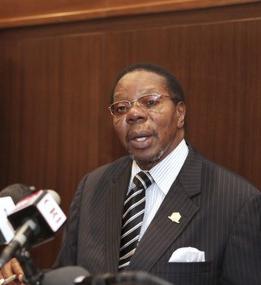
Malawi President Bingu wa Mutharika

© Malawi Finance Min/afrol News
n Malawi and its main donors.

Norway earlier this year demanded a payback of euro 2.7 million (US$ 3.8 million) of development aid funds that had been spent on other sectors than agreed. The demand created great headlines in Malawi, but government agreed to repay the funds.

Conflict with donors was deepened in February as Malawi was preparing repressive legislation victimising sexual minorities and further limiting press freedom. Combined with other signs of an increased level of human rights violations, Western donors made it clear they had enough.

Germany and the US took the lead in condemning these new repressive tendencies.

Currently, euro 2.5 million of German budget aid for Malawi for 2010 are still held back and a further euro 5 million in budget aid for 2011 have been frozen. Deputy Development Minister Gudrun Kopp last month cancelled her planned trip to Malawi, explaining that he frozen aid funds would only be released when "the democratisation process sees positive developments," stated Ms Kopp.

The toughest message so far was given by the US aid agency MCC, which in January signed a record US$ 350 aid deal to renovate Malawi's energy sector. In February, the MCC decided to delay the release of these funds until clarifications were given about the new legislation. The MC

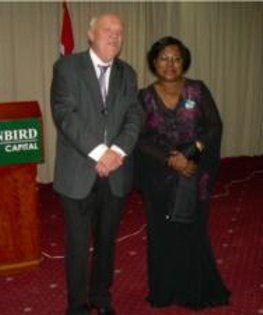
A recent encounter between Malawi Foreign Minister Etta Banda and outgoing Norwegian Ambassador Bjørn Johannessen

© Norway Embassy/afrol News
C only releases its massive impacts to countries with high human rights standards.

The German and US moves were followed up by joint action by Malawi's eight main donors. France, Germany, Iceland, Ireland, Japan, Norway, the UK and the US last month presented government with a joint statement condemning "certain negative trends in the country," referring to the same legislation.

"As partners and friends, we would like to recall that good governance and respect for human rights - including freedom of expression, observance of democratic principles, and freedom from discrimination - are the foundation upon which our partnership is built," the statement reads.

The Malawian government so far has not been willing to give into the demands from donors. Only this week, President Bingu wa Mutharika defended the repressive media legislation. Also, gay and lesbian sexual relations were banned last month. Also, police reactions to possible "subversive" events have toughened.

Malawi is among the world's most aid dependent nations. During the governance of President Mutharika - a former IMF official - aid levels from Western donors until now had steadily grown as Malawi had been seen to make progress regarding economic policies, the fight against corruption and in democracy and human rights issues.


- Create an e-mail alert for Malawi news
- Create an e-mail alert for Economy - Development news
- Create an e-mail alert for Politics news


    Printable version

On the Afrol News front page now


UN will not monitor human rights in Western Sahara

afrol News - The US has backed down on its demand that UN peacekeepers in Moroccan-occupied Western Sahara also shall monitor the human rights situation after Moroccan sources threatened to scale down relations with Washington.
Central African Republic
Central African Republic falling apart

afrol News - One month after the rebel movement Séléka took over power in the Central African Republic, unrest is spreading in the country. The new leader lacks control of his forces, which continue looting and abusing civilians.
Kenya
Kenyatta secures tight victory in Kenya

afrol News - The official election results in Kenya have finally been announced, and Uhuru Kenyatta managed to win the first poll round outright with a narrow 50.7 percent. But the main opponent, PM Raila Odinga, is filing a vote rigging complaint to the courts.
Cape Verde
Cape Verde to produce dragon fruit

afrol News - Cape Verde authorities have invested large sums to diversify the arid country's agricultural sector. Now, the dragon fruit, originating in tropical America, is being introduced for the first commercial production in Africa.
Egypt
Even governors in Pharaonic Egypt died in their 20s

afrol News - Researchers have analysed more than 200 mummies from ancient Egypt, finding that even high dignitaries were poorly nourished and had infectious diseases. The typical governor in Pharaonic Egypt died before he was 30 years old.


front page | news | countries | archive | currencies | news alerts login | about afrol News | contact | advertise | español 

©  afrol News. Reproducing or buying afrol News' articles.

   You can contact us at mail@afrol.com