Subscriptions Central AfricaEast AfricaHorn of AfricaIndian OceanNorth AfricaSouthern AfricaWest AfricaAfrica / World Agriculture - NutritionCulture - ArtsEconomy - DevelopmentEnvironment - NatureGay - LesbianGender - WomenHealthHuman rightsLabourMediaPoliticsScience - EducationSocietyTechnologyTravel - Leisure From Behind By Country By Topic Chronological Press Releases Partner Media Contact Us


See also:
» 17.11.2009 - Algerian company celebrate first order for Boeing
» 10.11.2009 - SA hotel industry warned of price inflation
» 02.11.2009 - First Dengue fever outbreak in Cape Verde
» 08.10.2009 - Environmentalists condemn Mozambique's planned damming of Zambezi
» 29.04.2009 - Two African projects named winners of climate grants
» 26.01.2009 - Google Earth reveals hidden environment treasure in Mozambique
» 02.01.2007 - Tourism sector tops Mozambique investments
» 20.08.2004 - Mozambican fishermen protect terns and turtles

Mozambique
Travel - Leisure | Environment - Nature

Northern Mozambique becomes "charter" destination

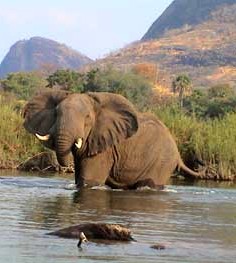
Elephants in Niassa Reserve

Elephants in Niassa Reserve: Waterway encounter

© Twinspot / afrol News
afrol News, 20 June
- The "totally unspoilt wilderness" of the large Niassa Reserve in northern Mozambique is being discovered by international tourists. A pioneer UK tour operator is now shipping "explorers" directly into the remote and poorly connected park, which is the largest protected area in Mozambique and counts on more than 12,000 elephants.

Run-down dirt roads pass through a vast landscape of open savannas, seemingly depopulated and a wilderness untouched by human hands. Still, there are hundreds of kilometres before the Niassa Reserve - the real wilderness - turns up in little contrast to the surrounding landscapes of northern Mozambique.

With its 42,000 square kilometres - the size of Denmark - the Reserve is the largest protected area in Mozambique, and one of the largest protected tracts of Miombo woodland in the world. Representing a diverse variety of habitats and two perennial rivers on it borders, it covers almost one third of Niassa Province, and a part of the Cabo Delgado Province. To the north, it borders to Tanzania.

Fraser Gear first visited Niassa three years ago and fell in love with Mozambique's unique culture and the reserve's "pure wilderness". As it happens, Mr Gear is one of the directors of Twinspot Travel, a UK-based agency organising tours and expeditions to Southern and Central Africa. He decided to include the unexploited Niassa Reserve in the company's programme.

Isobel Raymond, another Twinspot director, told afrol News that the British company started arranging tours to Niassa Reserve "last year, taking the first tourists into this remote area." This season, operations are growing is scale as "we are building and moving the camps and creating a completely new tourism opportunity that did not exist in the park before," Ms Raymond explains.

- There is huge potential for tourism in this area, and we are the pioneers of this movement, she adds. The Twinspot director indeed is not exaggerating. The Reserve's management only recently has opened up Niassa, aiming at "developing commercial tourism operations" within strict environmental limits.

The Niassa Reserve will not become a mass tourism destination within long time. Even the Reserve's management admits that there are severe "constraints" for tourism development in Niassa, including the Reserve's "remoteness and difficult access ... lack of any established tourism infrastructure and the logistical hardship associated with starting an enterprise under these conditions."

These "constraints" however seemed to attract an operator such as Twinspot. For just these reasons, Niassa remains "an enormous and generally totally unspoilt wilderness," as Ms Raymond puts it. Upon discovering the qualities of the location, Mr Gear immediately started working with the managing body and community "to permit our more permanent presence there," Ms Raymond told afrol News.

Now, the new camps in Niassa Reserve have been completed, and the British safari ope
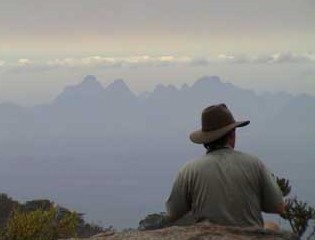
Niassa Reserve: Views from Mecula Mountain toward the Lugenda River

Scenery in Niassa Reserve

© Twinspot / afrol News
rator has announced its first organised trips to its new Niassa "headquarters" beginning from August this year. Safaris are thus to run between June and November every year. Twinspot plans to provide circular seven to nine day walking and canoe safaris from base camps.

- As well as luxury tented camps, Twinspot has set up self-drive camping, wilderness walking and canoeing with campsites set out along the river along with self-guiding routes, the company explains its concept. "This opens the area to both self-catering overland options and exclusive luxury tourism," Twinspot adds. The organised travels generally take off from London.

The sights in the Reserve are of great variation, though relatively typical to Africa's southern and eastern savannah and woodland environment. While the landscape is everything from flat to hilly, nothing close to spectacular, the main attraction is the pristine estate of the environment. There are not wheel tracks and other tourists wherever you turn around and the Reserve looks and feels like it has done for thousands of years.

But the Reserve's wildlife is of course its best sales argument. An aerial census carried out in October 2002, put the elephant population at 12,000 individuals. Along with the elephants, Niassa hosts a number of endemic sub-species, notably Johnson's Wildebeest and Bohm's Zebra. Also the birdlife is outstanding, taking advantage of the different eco-types in the reserve.

This variation in ecosystems and its biodiversity and untouchedness were the original reasons for protecting the large area. The Niassa Reserve shifts between open savannah, wetlands and the characteristic Miombo woodland ecosystem - a low productivity woodland occurring on poor soils. These ecological variations - a total of 21 vegetation types have been registered in the Reserve - secure a high biodiversity.

Given the intact but fragile environmental resources in the Reserve, the local management authorities have opted for a soft, ecologically sensitive kind of tourism. During the last few years, the management has invited several experienced and successful tourism operators "to provide advice on the potential of Niassa Reserve for development of ecotourism."

- The general consensus is that ecotourism development in Niassa is going to be a very slow and difficult process at the beginning, they conclude. Although ecotourism will be slow to develop initially, however "the longer-term prospects are much brighter," the park management maintains. Meanwhile, it is still time to experience the Niassa Reserve as a pioneer tourist in its most pristine state.


    E-mail this to a friend     Printable version

Related pages and feature
Current afrol News Top Stories
Mozambique
Travel - Leisure
Environment - Nature
Development
Ecotourism
Management
Tourism
» Ghana-EU sign first voluntary agreement on legal timber exports
» Algeria-Egypt’s World Cup place explodes into a diplomatic war
» Malawi’s rural land development project gets additional funding
» Industrial development key to Africa’s integration in global economy
» Children’s rights still not assured, UNICEF
» Cambodia troops arrive in CAR
» UN-lawmakers' partnership can help the poor out of recession, Ban
» Developing countries urged to make agriculture a funding priority
» Concluding Doha Round could boost recovery, WB
» Zim govt report compliance progress to clean its diamond trade


top of page about afrol News | news | countries | archive | services | feed back | español 

© afrol News. Reproducing or buying afrol News' articles.

   You can contact us at mail@afrol.com