afrol News, 15 February - The Nigerian government will not rule out military actions against Togo if the coup regime in Lomé does not comply with West African demands to step down. In the Togolese capital, meanwhile, the fronts are hardening as the new ruler continue their crackdown on the media and the opposition promises new protest marches.
While the Economic Community of West African States (ECOWAS) is using diplomatic channels to persuade Togo's coup-makers to step down, its leading member state, Nigeria, is playing it tougher. The Nigerian presidency will not rule out sending troops to Togo if constitutional order is not restored there.
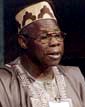
Femi Fani-Kayode, spokesman of Nigeria's President Olusegun Obasanjo, today was asked whether his country was considering using military force in Togo. "Whatever it takes to ... ensure there is peace, democracy and stability in the West African sub-region, we will do," the spokesman answered.
Mr Fani-Kayode did not want to go into details about possible plans to militarily intervene in Togo. He however made it clear that Nigeria had the military capacity to front such an intervention. "No one should test the will of our President," the spokesman declared.
Nigeria's President Obasanjo has taken the lead in the West African condemnation of the Togolese power transfer. He was the first African leader to use the term "coup" when referring to the installation of Faure Gnassingbé as successor of his deceased father, President Gnassingbé Eyadéma by Togo's armed forces.
ECOWAS as a block has so far not threatened Togo with military action, but presented the new rulers in Lomé with an ultimatum. Togo would be excluded from ECOWAS and sanctions would be imposed if the constitutional was not re-imposed within days. This would include handing power over to Togo's parliamentary speaker and prepare for presidential elections to be held within 60 days.
An ECOWAS mission today finally reached Lomé to negotiate on the demands put forward by the West African block. The mission, which includes the Foreign Ministers of Ghana, Niger and Nigeria, are to meet with the current Togolese leader, Mr Faure, tomorrow. Interviewed in Lomé, representatives from the ECOWAS mission emphasised that military threats were not an option at this step.
While the international pressure against Mr Faure and the Togolese military is increasing from day to day, so is the internal pressure. A united front of Togo's leading opposition party's has already organised two major protest marches in Lomé, defying a ban by the current authorities. Three persons were killed by police and army forces on Saturday, while at least four were killed on Monday. The opposition however claims more than ten deaths from Monday's protests.
The united opposition front today pledged to repeat its protests despite the violent police and army crackdown. According to a statement issued by the protests' organisers, it was now a "necessity to mobilise the population in protest against the coup d'état." The opposition hopes to return Togo back to its constitutional order without a need for foreign intervention.
The de facto government of Togo is however striking back by muzzling the increasingly critical Togolese press. During the last week, six independent media have been closed down by the High Council for Broadcasting and Communication (HAAC), a government media regulatory body, using different legislation to target the outspoken radio and TV broadcasters.
On Friday, Togolese authorities shuttered four stations that had protested the military coup. Several hours after the stations had closed, a Lomé court ordered them suspended for one month at the HAAC. According to local sources, the order accused the broadcasters of inciting "civil disobedience" and "racial hatred" on the air.
Yesterday, two more broadcasters were closed, 'Radio Carré Jeunes' and 'Télévision Zion'. The HAAC cited alleged unpaid administrative fees. Contrary to those stations closed down on Friday, the two broadcasters do not often carry political commentary.
The Union of Free Radio and Television Stations of Togo (URATEL) is due to meet in the coming days. Local sources said a national one-day radio strike may be organised in protest to the government crackdown on the media. Listeners are also reported to have gathered in front of the sealed radio stations to protest their closure, clashing with riot police on at least one occasion.
afrol News - It is called "financial inclusion", and it is a key government policy in Rwanda. The goal is that, by 2020, 90 percent of the population is to have and actively use bank accounts. And in only four years, financial inclusion has doubled in Rwanda.
afrol News - The UN's humanitarian agencies now warn about a devastating famine in Sudan and especially in South Sudan, where the situation is said to be "imploding". Relief officials are appealing to donors to urgently fund life-saving activities in the two countries.
afrol News - Fear is spreading all over West Africa after the health ministry in Guinea confirmed the first Ebola outbreak in this part of Africa. According to official numbers, at least 86 are infected and 59 are dead as a result of this very contagious disease.
afrol News - It is already a crime being homosexual in Ethiopia, but parliament is now making sure the anti-gay laws will be applied in practical life. No pardoning of gays will be allowed in future, but activist fear this only is a signal of further repression being prepared.
afrol News / Africa Renewal - Ethiopia's ambitious plan to build a US$ 4.2 billion dam in the Benishangul-Gumuz region, 40 km from its border with Sudan, is expected to provide 6,000 megawatts of electricity, enough for its population plus some excess it can sell to neighbouring countries.










 front page
| news
| countries
| archive
| currencies
| news alerts login
| about afrol News
| contact
| advertise
| español
front page
| news
| countries
| archive
| currencies
| news alerts login
| about afrol News
| contact
| advertise
| español