afrol News / SciDev.Net, 9 March - Scientists in Uganda are calling for the international community to take more interest in sleeping sickness and help combat the disease. They say that drugs currently used to treat the disease are old and toxic, and that sleeping sickness warrants a higher research priority because of its threat to health.
The comments were made at a meeting in Kampala, Uganda, this week, organised by the Ugandan Ministries of Health and Agriculture, together with UK-based communication company WRENmedia. Participants discussed the human cost of sleeping sickness and the results of recent studies conducted in northern Uganda.
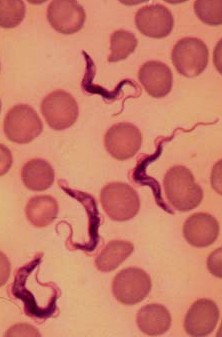
In Uganda alone over nine million people are at risk of infection from the disease, caused by the parasite Trypanosoma. Yet only 20 percent of these people have access to diagnostic services, according to the World Health Organisation (WHO).
"Long-term failure by the West to help Africa control the spread of tsetse flies - which spread the disease - has resulted in [the flies] multiplying, attacking larger areas and infecting hundreds of thousands of Africans," said Dawson Mbulamberi from the Ugandan Health Ministry.
Mr Mbulamberi and Fred Kansiime, from the Ministry of Agriculture's Coordinating Office for Control of Trypanosomiasis (sleeping sickness), said that once someone contracts sleeping sickness, death is certain without fast diagnosis and treatment.
Abbas Kakembo, a senior field officer in the Kampala Ministry of Health, revealed that over 500,000 people are infected with the disease in Uganda.
"One of the serious constraints is that drugs [available for treating sleeping sickness] are old and toxic, particularly melarsoprol and eflornithine. And in one of the worst-hit areas - Arua District close to DRC [Congo Kinshasa] and South Sudan - 30 percent of those treated had resistance to drugs," he said.
Mr Kakembo added that only five percent of those infected are under surveillance or have access to medical care.
Miriam Nanyunja, a disease prevention and control officer at the WHO, agreed that more should be done to tackle the disease. However, she said the Ugandan Ministry of Agriculture should also take in more responsibilities. Ugandan authorities should more strongly support health experts in efforts to trap tsetse flies and train farmers to cut down bushes where the flies live.
The WHO has indicated that the two main sub-types of the African sleeping sickness parasite - gambiese from West Africa and rhodesiense from Zimbabwe - are likely to overlap in Uganda, making it difficult to diagnose and treat the disease correctly. While the West African variant causes chronic disease among humans, the Southern African type mainly attacks cattle and wild game, but can cause acute infections among humans.
Sleeping sickness or African trypanosomiasis is transmitted by the tsetse fly, which is endemic to the tropical parts of Africa, expect for desert and semi-desert zones. In addition to being a large public health risk in these parts of the continent, it also severely limits livestock production here.
afrol News - It is called "financial inclusion", and it is a key government policy in Rwanda. The goal is that, by 2020, 90 percent of the population is to have and actively use bank accounts. And in only four years, financial inclusion has doubled in Rwanda.
afrol News - The UN's humanitarian agencies now warn about a devastating famine in Sudan and especially in South Sudan, where the situation is said to be "imploding". Relief officials are appealing to donors to urgently fund life-saving activities in the two countries.
afrol News - Fear is spreading all over West Africa after the health ministry in Guinea confirmed the first Ebola outbreak in this part of Africa. According to official numbers, at least 86 are infected and 59 are dead as a result of this very contagious disease.
afrol News - It is already a crime being homosexual in Ethiopia, but parliament is now making sure the anti-gay laws will be applied in practical life. No pardoning of gays will be allowed in future, but activist fear this only is a signal of further repression being prepared.
afrol News / Africa Renewal - Ethiopia's ambitious plan to build a US$ 4.2 billion dam in the Benishangul-Gumuz region, 40 km from its border with Sudan, is expected to provide 6,000 megawatts of electricity, enough for its population plus some excess it can sell to neighbouring countries.










 front page
| news
| countries
| archive
| currencies
| news alerts login
| about afrol News
| contact
| advertise
| español
front page
| news
| countries
| archive
| currencies
| news alerts login
| about afrol News
| contact
| advertise
| español