afrol News, 10 June - The unity government of Zimbabwe has put the controversial indigenisation programme on ice, fearing investors will not return to the country. The programme demands Zimbabweans to hold a share majority in mains sectors.
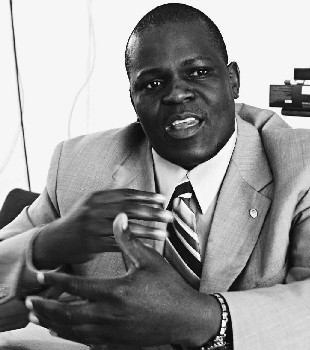
The indigenisation programme will not commence until after the new changes to the legislation have been approved by new Zimbabwean cabinet, Deputy Minister of Indigenisation and Empowerment Thamsanga Mahlangu states.
Mr Mahlangu said the legislation gazetted by Minister Savior Kasukuwere early this year was under review by a government committee on legislation as there were "issues that need attention." The delay was also aimed at allowing for more consultation on the law.
President Robert Mugabe's government had originally enacted the Indigenisation and Economic Empowerment Act in 2007, which stipulates that Zimbabweans must hold 51 percent shareholding in major sectors of the economy.
Last month, Zimbabwe's "opposition" Prime Minister Morgan Tsvangirai however stated that indigenisation programmes must not scare away investors. He announced that his MDC ministers would look into possibilities to soften the controversial legislation.
Deputy Minister Mahlangu noted that, before the intervention of Prime minister Tsvangirai, the indigenisation programme had been promoted in such a way that it appeared to be a programme of President Mugabe's ZANU party and was "likely to become as chaotic as the land reform," which threw the country into economic chaos.
"There are some contents in the original law that we feel are illegal and therefore need to be changed. The whole idea should be to look at the act itself and ensure that is done in a spirit of inclusivity and common understanding between both parties," Mr Mahlangu says.
"The act was wrong from the start; it needs to go back to Parliament for amendments. No one is against empowerment, but we are all against how it is done, if we are not careful this indigenisation process would have become as chaotic as the land reform programme. It cannot be empowerment if it is only the rich who are going to benefit. The majority should benefit and not a few already-rich people," the Deputy Minister added.
He said the Zimbabwean government did not have money to sponsor the indigenisation process and it needed to consult stakeholders such as business people to ensure the smooth flow of the process.
"We need a programme that is investor friendly so that we can create employment, but rather we are chasing away the very few investors that we have and even scaring away those who want to invest in the country," concluded Mr Mahlangu.
afrol News - It is called "financial inclusion", and it is a key government policy in Rwanda. The goal is that, by 2020, 90 percent of the population is to have and actively use bank accounts. And in only four years, financial inclusion has doubled in Rwanda.
afrol News - The UN's humanitarian agencies now warn about a devastating famine in Sudan and especially in South Sudan, where the situation is said to be "imploding". Relief officials are appealing to donors to urgently fund life-saving activities in the two countries.
afrol News - Fear is spreading all over West Africa after the health ministry in Guinea confirmed the first Ebola outbreak in this part of Africa. According to official numbers, at least 86 are infected and 59 are dead as a result of this very contagious disease.
afrol News - It is already a crime being homosexual in Ethiopia, but parliament is now making sure the anti-gay laws will be applied in practical life. No pardoning of gays will be allowed in future, but activist fear this only is a signal of further repression being prepared.
afrol News / Africa Renewal - Ethiopia's ambitious plan to build a US$ 4.2 billion dam in the Benishangul-Gumuz region, 40 km from its border with Sudan, is expected to provide 6,000 megawatts of electricity, enough for its population plus some excess it can sell to neighbouring countries.










 front page
| news
| countries
| archive
| currencies
| news alerts login
| about afrol News
| contact
| advertise
| español
front page
| news
| countries
| archive
| currencies
| news alerts login
| about afrol News
| contact
| advertise
| español