afrol News, 24 September - The deadly smallpox virus was eradicated worldwide in 1979, and the year after, vaccination stopped. But the vaccine had also protected against the dangerous "monkeypox" virus, and now a new generation in DR Congo is increasingly exposed to the disease.
In the winter of 1979, the world celebrated the end of smallpox, a highly contagious and often fatal viral infection estimated to have caused between 300 and 500 million deaths during the 20th century.
The virus was eradicated through an aggressive worldwide vaccination campaign, which itself ended in 1980. After all, with no virus, there was no longer a need for a vaccine. Now, researchers at University of California (UCLA) say the elimination of the smallpox vaccine had allowed a related virus to thrive.
According to studies in the Congo Kinshasa (DRC) done by UCLA assistant professor Anne Rimoin, 30 years after the mass smallpox vaccination campaign ceased, rates of a related virus known as human monkeypox have increased dramatically in rural DRC, with sporadic outbreaks in other African nations and beyond.
Monkeypox is mostly passed from animals to humans. "The name 'monkeypox' is really a misnomer," Ms Rimoin holds. "The disease was first identified in laboratory monkeys, thus providing it with its name. But in its natural state, it seems to infect squirrels and other rodents much more than primates."
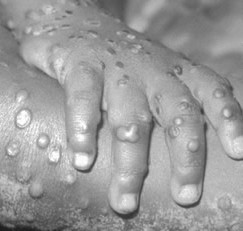
Symptoms of monkeypox in humans include severe eruptions on the skin, fever, headaches, swollen lymph nodes, possible blindness and even death. There is no treatment. "All you can do is providing supportive care," Ms Rimoin said. "There are no antibiotics. If you survive, the illness eventually runs its course."
Once the smallpox vaccination programme ended, new generations of people who were "vaccine naive" were exposed to the monkeypox virus the DRC over time, and the number of people who became infected gradually increased. But the increase went unnoticed because the nation has little or no health infrastructure and thus no way to monitor the spread of such diseases.
That is why, until her recent report, Ms Rimoin said, monkeypox was thought to be very rare. Her research shows, however, that it has become very common.
Ms Rimoin has established a research site in the DRC to study and track cross-species transmission of the disease. For this work, she conducted surveillance in the central region of the country between 2006 and 2007, gathering epidemiologic data and biological samples. Her team then compared the current incidences of infection with data gathered in similar regions from 1981 to 1986.
The results were startling, showing "a 20-fold increase in human monkeypox in the DRC since smallpox vaccinations were ended in 1980," Ms Rimoin said.
The US scientist expresses great concern that the virus will start spreading even more rapidly, both in animal and human populations. "The point is, it does not take much for it to spread," she warns.
Because it was "unlikely" that smallpox vaccinations would be resumed, Ms Rimoin is now calling for improved health care education in the DRC and better disease surveillance. There was "an urgent need" to develop a strategy for reducing the risk of a wider spread of infections, she concluded.
afrol News - It is called "financial inclusion", and it is a key government policy in Rwanda. The goal is that, by 2020, 90 percent of the population is to have and actively use bank accounts. And in only four years, financial inclusion has doubled in Rwanda.
afrol News - The UN's humanitarian agencies now warn about a devastating famine in Sudan and especially in South Sudan, where the situation is said to be "imploding". Relief officials are appealing to donors to urgently fund life-saving activities in the two countries.
afrol News - Fear is spreading all over West Africa after the health ministry in Guinea confirmed the first Ebola outbreak in this part of Africa. According to official numbers, at least 86 are infected and 59 are dead as a result of this very contagious disease.
afrol News - It is already a crime being homosexual in Ethiopia, but parliament is now making sure the anti-gay laws will be applied in practical life. No pardoning of gays will be allowed in future, but activist fear this only is a signal of further repression being prepared.
afrol News / Africa Renewal - Ethiopia's ambitious plan to build a US$ 4.2 billion dam in the Benishangul-Gumuz region, 40 km from its border with Sudan, is expected to provide 6,000 megawatts of electricity, enough for its population plus some excess it can sell to neighbouring countries.










 front page
| news
| countries
| archive
| currencies
| news alerts login
| about afrol News
| contact
| advertise
| español
front page
| news
| countries
| archive
| currencies
| news alerts login
| about afrol News
| contact
| advertise
| español