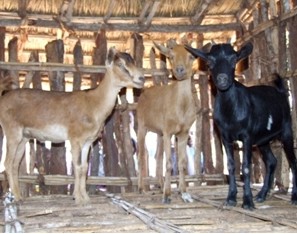
afrol News, 2 November - A deadly disease which broke out in Tanzania this year risks spreading to Southern Africa, posing a mortal threat to more than 50 million sheep and goats and bringing risks of famine to the region, FAO warned today.
Known as Peste des Petits Ruminants - or Small Ruminants' Plague (PPR) - it is considered as the most destructive viral disease affecting small ruminant flocks, on par with rinderpest in cattle in the past. Rinderpest is a deadly cattle plague that has wreaked havoc on agriculture for millennia, resulting in famine and economic destruction.
PPR is equally virulent and damaging to societies dependent on sheep and goats, but has until know seldom been observed in Africa. The viral disease may cause death rates of up to 100 percent in sheep and goats and, although it does not infect humans, it causes enormous socio-economic losses.
The UN's agricultural agency FAO today issued the dramatic warning, following a recent emergency mission to Tanzania by the agency's Crisis Management Centre - Animal Health (CMC-AH).
The mission recommended that Tanzania initiate an emergency vaccination programme around the disease outbreak site in the northern half of the country and consider additional vaccination in the area bordering Malawi, Mozambique and Zambia.
"It is important also that the latter countries immediately step up vigilance and engage in proactive surveillance," the FAO warning urged.
If the disease was allowed to spread from Tanzania into the whole of the 15-nation Southern African Development Community (SADC) it could potentially "devastate the livelihoods and food security of millions of small herders and agro-pastoralists," it added.
PPR broke out in Tanzania in early 2010, threatening a local population of over 13.5 million goats and over 3.5 million sheep. It occurs in Middle Eastern countries and parts of Central and South Asia, while in Africa it has affected the western, eastern and central parts of the continent. But so far, Southern Africa has been spared.
FAO mission leader Adama Diallo said the disease is easily transmissible by direct contact between live animals in shared pastures and at live animal markets. Mr Diallo heads the Animal Production and Health Laboratory in Vienna, Austria.
To halt further spread of the disease his team recommended targeted vaccination of small ruminants based on critical control points and routes used by pastoralists.
"But vaccination of small ruminants in a wider area is required in southern Tanzania where this is particularly relevant as any virus here poses a risk to SADC as a whole. The first priority is therefore to ensure that the virus ceases circulating there," the FAO team advised.
For the northern half of the country, emergency vaccination around outbreak sites would be important to halt the virus and sheep and goat keepers must not move their animals until allowed to do so by the authorities, Mr Diallo said.
FAO, he added, was "available to help countries monitor the availability of vaccine stocks for emergency vaccination, reinforce laboratory capacity and strengthen active surveillance in the field." The UN agency could also assist in enhancing awareness of the disease among field veterinarians, pastoralists and traders.
Juan Lubroth, FAO's Chief Veterinary Officer, noted that, "sheep and goats are critical to food and income security for pastoral communities. The presence of the disease directly affects a family's wealth, hence the veterinary services of countries in the region must review their preparedness plans, strengthen border control and improve surveillance."
"We are at the disposal of SADC in times of need. This may well be one of those times," Mr Lubroth added.
afrol News - It is called "financial inclusion", and it is a key government policy in Rwanda. The goal is that, by 2020, 90 percent of the population is to have and actively use bank accounts. And in only four years, financial inclusion has doubled in Rwanda.
afrol News - The UN's humanitarian agencies now warn about a devastating famine in Sudan and especially in South Sudan, where the situation is said to be "imploding". Relief officials are appealing to donors to urgently fund life-saving activities in the two countries.
afrol News - Fear is spreading all over West Africa after the health ministry in Guinea confirmed the first Ebola outbreak in this part of Africa. According to official numbers, at least 86 are infected and 59 are dead as a result of this very contagious disease.
afrol News - It is already a crime being homosexual in Ethiopia, but parliament is now making sure the anti-gay laws will be applied in practical life. No pardoning of gays will be allowed in future, but activist fear this only is a signal of further repression being prepared.
afrol News / Africa Renewal - Ethiopia's ambitious plan to build a US$ 4.2 billion dam in the Benishangul-Gumuz region, 40 km from its border with Sudan, is expected to provide 6,000 megawatts of electricity, enough for its population plus some excess it can sell to neighbouring countries.










 front page
| news
| countries
| archive
| currencies
| news alerts login
| about afrol News
| contact
| advertise
| español
front page
| news
| countries
| archive
| currencies
| news alerts login
| about afrol News
| contact
| advertise
| español