See also:
» 05.05.2011 - Pan-African parliamentary science forum launched
» 15.03.2011 - Protest wave reaches Burkina Faso
» 17.02.2011 - Students keep Algeria protests warm
» 08.02.2011 - Large student protests in Algeria
» 14.01.2011 - Slow progress for literacy in Senegal
» 28.07.2008 - First HIV surveillance programme in Somaliland
» 06.04.2006 - Professor urges modification of Somaliland's name to "Somalistan"
» 20.08.2004 - Somaliland now counts on four universities


SQL/DB Error -- [Unknown table engine 'InnoDB']
Somaliland
Science - Education

Somaliland meets giant education challenge

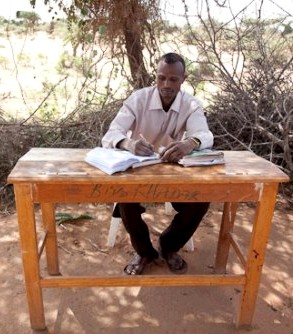
Teacher Suleiman Khalip runs the small nomadic open-air school in Bacado

© Kristian Buus/Stars/afrol News
afrol News, 2 December
- Less than one third of school-aged children in Somaliland receive education, and even these low numbers represent a doubling of schooling rates in one decade. An NGO is behind much of the success.

The Hargeisa-based non-governmental organisation (NGO), Africa Educational Trust (AET) is among the main drivers in Somaliland's efforts to improve its disastrous education situation. Also government in the self-declared republic is spending much of its limited resources to re-build a nation-wide education system.

As recently as 2000, only around 15 percent of school-aged children in Somaliland attended schools, and only 7 percent of these were girls. Today, it is estimated that 30 percent of school-aged children are in schooling and 30 percent of these are girls.

"Progress has been made, but much more still needs to be made," Muna Wehbe of the UK-based Stars Foundation told afrol News. Ms Wehbe today presented her charity's Impact Award, consisting of US$ 100,000 in unrestricted funding, to the Somaliland educational trust at a ceremony in London.

"Delivering any level of educational service to children in Somaliland whilst working under such difficult conditions is impressive, let alone reaching the high standards of innovation that AET manages to," Vicki Peaple of Stars Foundation commented.

Indeed, the educational situation in Somaliland has been difficult since Somali Dictator Siad Barre reacted to Somalilander opposition to his regime by destroying much of the social infrastructure of the former British colony.

Most schools and educational resources were de

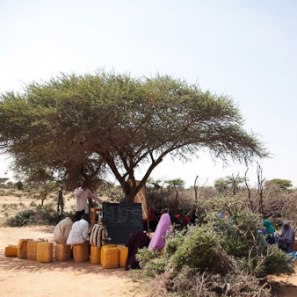
The small school in Bacado follows its nomadic pupils

© Kristian Buus/Stars/afrol News
stroyed during the Barre regime, resulting in the virtual collapse of the education system. It is estimated that 80 percent of the educated population of Somaliland fled the country during conflict and this has left a drastic void in the development of post-conflict Somaliland.

Since its unilateral declaration of independence in 1991, the unrecognised - and therefore under-funded - government of Hargeisa has tried to rebuild a public education system in the country. Many primary schools, and even several universities, have since been inaugurated, but government funds are too limited to reach the goal of offering universal schooling.

The Somaliland branch of the Africa Educational Trust meanwhile has become the most important NGO providing education in the country. "Through its range of innovative educational services, AET has reached out to generations of children and adults who have missed out on an education, and has gradually raised levels of literacy and numeracy across Somaliland and beyond," Ms Peaple told afrol News.

The organisation runs a number of education programmes which target some of the most rural and hard to reach areas of Somaliland. Internally displaced people, nomadic people, and people living in rural areas are taught through a radio-based literacy programme and mobile and makeshift schools. These programmes focus mainly on providing basic literacy

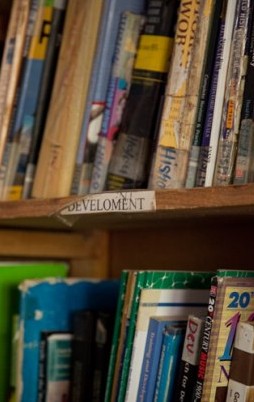
Library of the Hargeisa Disability Resource Centre

© Kristian Buus/Stars/afrol News
and numeracy skills and target vulnerable groups.

It also runs schools in camps for internally displaced people in and around Hargeisa. The camps go back to the civil war in 1991 and some of the inhabitants have been there 20 years. Others are new-comers from the countryside fleeing climate change which is causing livestock to die and crops to fail.

Also in Hargeisa, the organisation runs a Disability Resource Centre that also provides education. Many disabilities are caused by polio or landmine incidents.

In rural areas, AET schools are mostly the only education offered. In the remote village of Bacado, teacher Suleiman Khalip says his school is following the movements of the nomadic population. The service is popular: "The children walk up to 7 km to get to school through the rough terrain, often alone after their parents have initially shown them the way," Mr Khalip says.

Also Somaliland authorities recognise the big effort of AET. Authorities aim at provide universal education services, but the entire government budget for 2010 is only totalling US$ 61 million. The Hargeisa Ministry of Education was allocated a total of US$ 2.44 million out of this, or 4 percent of the national budget.

Government estimates the population of Somaliland at around 3.5 million. More than 73 percent of the country's population lives in poverty and 43 percent in extreme poverty.


- Create an e-mail alert for Somaliland news
- Create an e-mail alert for Science - Education news


    Printable version

On the Afrol News front page now


UN will not monitor human rights in Western Sahara

afrol News - The US has backed down on its demand that UN peacekeepers in Moroccan-occupied Western Sahara also shall monitor the human rights situation after Moroccan sources threatened to scale down relations with Washington.
Central African Republic
Central African Republic falling apart

afrol News - One month after the rebel movement Séléka took over power in the Central African Republic, unrest is spreading in the country. The new leader lacks control of his forces, which continue looting and abusing civilians.
Kenya
Kenyatta secures tight victory in Kenya

afrol News - The official election results in Kenya have finally been announced, and Uhuru Kenyatta managed to win the first poll round outright with a narrow 50.7 percent. But the main opponent, PM Raila Odinga, is filing a vote rigging complaint to the courts.
Cape Verde
Cape Verde to produce dragon fruit

afrol News - Cape Verde authorities have invested large sums to diversify the arid country's agricultural sector. Now, the dragon fruit, originating in tropical America, is being introduced for the first commercial production in Africa.
Egypt
Even governors in Pharaonic Egypt died in their 20s

afrol News - Researchers have analysed more than 200 mummies from ancient Egypt, finding that even high dignitaries were poorly nourished and had infectious diseases. The typical governor in Pharaonic Egypt died before he was 30 years old.


front page | news | countries | archive | currencies | news alerts login | about afrol News | contact | advertise | español 

©  afrol News. Reproducing or buying afrol News' articles.

   You can contact us at mail@afrol.com