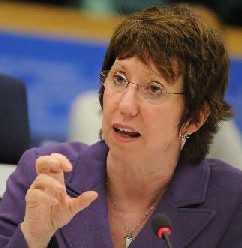
afrol News, 15 February - European Union (EU) "Foreign Minister" Catherine Ashton in Tunisia promised a large and immediate increase in aid and investments. Meanwhile, tourists are set to return to Tunisia.
Ms Ashton said she yesterday had a "very constructive meetings with Prime Minister Ghannouchi and several members of the transitional government," adding the EU was "wholeheartedly behind the Tunisian people's aspirations for freedom and democracy."
At the end of her visit to Tunisia, Ms Ashton could conclude on several EU measures to support the democratisation process in the country and to kick-start the post-revolutionary economy after the temporary setbacks during the unrest.
"We will work to recast our assistance, and that is euro 258 million between now and 2013. We are also today immediately adding new resources of euro 17 million," Ms Ashton said in a concluding speech.
The additional EU funds for Tunisia would be mostly directed towards building "deep democracy" in the country, in close cooperation with local civil society groups. Ms Ashton had also met with human rights activists, women's groups and youth representatives at the headquarters of the Tunisian Human Rights League.
"We want to both help deliver and underpin political openness, help with the democratic transition, and also support economic and social development," Ms Ashton said with reference to the new goals for the EU's significant aid for Tunisia.
With regards to rebuilding the Tunisian economy - social problems and widespread unemployment were major reasons behind the unrest - Ms Ashton promised the EU would assist by promoting investments in the country.
Ms Ashton said she had "opened discussions with the European Investment Bank to mobilise – focusing on the first instance on Tunisia – up to euro 1 billion of finance this year. This could be used to help small and medium-sized businesses and to boost transport infrastructure," she explained.
Finally, the EU official offered Tunisians a deeper integration into the European economy and market. Negotiations about an "advanced status" for EU-Tunisian trade relations had been slow due to human rights and democracy deficits during the Ben Ali regime, but Ms Ashton now promised such talks could be "moving forward," inviting the new Tunisian government to begin such talks.
Meanwhile, most European countries have now moved forward to lift travel warnings to Tunisia, or most parts of Tunisia. The latest to follow past was Switzerland, which today lifted restrictions on travel to "the capital Tunis and seaside resorts."
Germany-based TUI, the world's largest tour operator, is restarting its flights to Tunisia already 1 March, including favourite destinations Monastir, Sousse and Djerba. A quick restart of tourism industry in Tunisia, at least before the summer high season, is seen as key to restoring the country's economy.
afrol News - It is called "financial inclusion", and it is a key government policy in Rwanda. The goal is that, by 2020, 90 percent of the population is to have and actively use bank accounts. And in only four years, financial inclusion has doubled in Rwanda.
afrol News - The UN's humanitarian agencies now warn about a devastating famine in Sudan and especially in South Sudan, where the situation is said to be "imploding". Relief officials are appealing to donors to urgently fund life-saving activities in the two countries.
afrol News - Fear is spreading all over West Africa after the health ministry in Guinea confirmed the first Ebola outbreak in this part of Africa. According to official numbers, at least 86 are infected and 59 are dead as a result of this very contagious disease.
afrol News - It is already a crime being homosexual in Ethiopia, but parliament is now making sure the anti-gay laws will be applied in practical life. No pardoning of gays will be allowed in future, but activist fear this only is a signal of further repression being prepared.
afrol News / Africa Renewal - Ethiopia's ambitious plan to build a US$ 4.2 billion dam in the Benishangul-Gumuz region, 40 km from its border with Sudan, is expected to provide 6,000 megawatts of electricity, enough for its population plus some excess it can sell to neighbouring countries.










 front page
| news
| countries
| archive
| currencies
| news alerts login
| about afrol News
| contact
| advertise
| español
front page
| news
| countries
| archive
| currencies
| news alerts login
| about afrol News
| contact
| advertise
| español