afrol News, 17 February - "Tunisia and Egypt are a big 'we can do it too,' not just for Swaziland, but for the rest of the African continent and the repressed Arab world," according to the Swazi opposition.
Sikelela Dlamini of the opposition Swaziland United Democratic Front (SUDF) says change is becoming increasingly urgent in Swaziland, an authoritarian absolute monarchy where the economy is in danger of spiralling out of control.
But as recent events in Tunisia and Egypt have shown, change can happen quickly, says Mr Dlamini in an interview. Other democratic movements, such as the SUDF in Swaziland, face several major challenges, however. In Swaziland, there are three main challenges, he explains.
Firstly, they have to ensure political unity in opposing their undemocratical regimes, as "unity for democracy is ultimately what triggers change," as Mr Dlamini puts it. "The major role of the SUDF initially is to galvanise as wide and crosscutting support for the democratisation of Swaziland as possible. The secret of course lies in mass mobilisation, which begins with recognition and due attraction of the main political players, including political parties, labour, students, women, CBO's, the church, the informal sector, the unemployed, youth, etc."
Secondly, although Tunisians and Egyptians have shown that unseating dictators can be done without external pressure or help, other democratic movements, including the SUDF in Swaziland, would probably need outside assistance to be ultimately successful, Mr Dlamini argues.
And even though such assistance has not been forthcoming up till now, there is really no reason for the international community - and most importantly the IMF, the West and South Africa - not to pressurize the Swazi regime on its poor human rights record, lack of democracy and appalling recent economic mismanagement, says the opposition activist.
And thirdly, he goes on, "there is a challenge of political apathy amongst African populations." Although the civic education of organisations such as the Foundation for Socio-Economic Justice and the Swaziland National Ex-Mineworkers Association had "dramatically improved the political and right-related consciousness of many Swazis and enabled them to link their poverty and lack of freedom to the policies of the present regime, many are still politically apathetic," says Mr Dlamini.
"At a very sceptical level, I sometimes regard my fellow citizens as not just apolitical but rather deeply depoliticised. Sadly, this goes for the highly educated too who should in a normal world constitute an influential intelligentsia. For this reason, their level of political consciousness will require perhaps double what it took to capacitate Zimbabweans to rise against three decades of Mugabe rule."
But, he holds, improved political consciousness is vital for other reasons, not least because history shows that anger and frustration is not necessarily vented at the regimes that are the root cause of this anger. "Ultimately, the economic crisis will make everyone stop, look, listen, and possibly act as well. People are already unhappy and there is a lot of uncertainty. No anger or frustration must be wasted. We must channel it to the collective agenda for regime change, almost the same way it happened in Tunisia and Egypt. The success of the SUDF's rollout of mass mobilisation, for me, lies in seizing this opportunity to its advantage," Mr Dlamini insists.
Mass mobilisation also would require the technology to inform the masses, however, and the level of technology in Swaziland lags behind that of Tunisia and Egypt. Nevertheless, Mr Dlamini remains confident that increasing access to especially mobile phones in Swaziland could play an important part of Swazi democratisation.
"Technology in the shape of the mobile phone has become ubiquitous across all sections of society, right from the primary school pupil all the way to the street vendor. All that remains is for every phone to have Internet connectivity to ease what has become decisively politically enabling social networking. It's doable!"
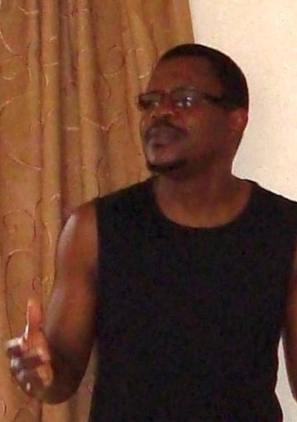
Sikelela Dlamini is an SUDF's Project Coordinator. He has also been secretary to the Swaziland Chapter of the Swaziland Democracy Campaign (SDC), an activist-based campaign wing of the SUDF, since its inception in February 2010. Mr Dlamini has a Master's Degree in Education from the University of Exeter and a PhD in Education from the University of Cape Town, and has been a political commentator on issues relating to Swaziland since 2003.
afrol News - It is called "financial inclusion", and it is a key government policy in Rwanda. The goal is that, by 2020, 90 percent of the population is to have and actively use bank accounts. And in only four years, financial inclusion has doubled in Rwanda.
afrol News - The UN's humanitarian agencies now warn about a devastating famine in Sudan and especially in South Sudan, where the situation is said to be "imploding". Relief officials are appealing to donors to urgently fund life-saving activities in the two countries.
afrol News - Fear is spreading all over West Africa after the health ministry in Guinea confirmed the first Ebola outbreak in this part of Africa. According to official numbers, at least 86 are infected and 59 are dead as a result of this very contagious disease.
afrol News - It is already a crime being homosexual in Ethiopia, but parliament is now making sure the anti-gay laws will be applied in practical life. No pardoning of gays will be allowed in future, but activist fear this only is a signal of further repression being prepared.
afrol News / Africa Renewal - Ethiopia's ambitious plan to build a US$ 4.2 billion dam in the Benishangul-Gumuz region, 40 km from its border with Sudan, is expected to provide 6,000 megawatts of electricity, enough for its population plus some excess it can sell to neighbouring countries.










 front page
| news
| countries
| archive
| currencies
| news alerts login
| about afrol News
| contact
| advertise
| español
front page
| news
| countries
| archive
| currencies
| news alerts login
| about afrol News
| contact
| advertise
| español