


|
Senegal Travel - Leisure Your secret African travel destinations: Saint-Louis, colonial tranquillity
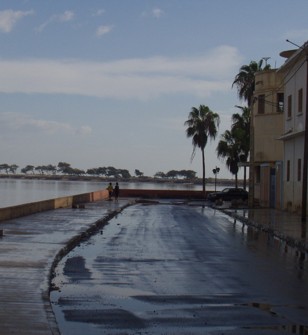
Saint-Louis is also a city that needs to be preserved. UNESCO recognised the city's unique values and history in 2000, naming it a World Heritage site. Not only the well preserved colonial architecture in the old town of Ndar found UNESCO approval; also the French-African interaction and Saint-Louis' cultural and historic importance for "a large part of West Africa" was given strong weight, Myself, I discovered Saint-Louis after a colleague, a senior travel journalist, chose to celebrate Christmas in this mainly Muslim city, which he had known from colonial times. So I decided to fit in a four-day purely holiday stay in Saint-Louis on what I knew would be a tough job visit to buzzing Dakar and rather boring Nouakchott. And it indeed became a relaxing stay - I think it is the most relaxing place I have been to in West Africa. It combined all the things I love - interesting sights; harmonic architecture; nice walks in fresh air; good food; and genuine African culture - but excluding the tourist traps and false facades of more crowded destinatio
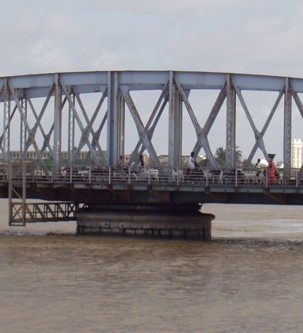
I especially appreciated the possibility of wandering around the contrasting parts of the city. Leaving the colonial city on Ndar on the fascinating Faidherbe iron bridge, you get to the new city of Saint-Louis, Sor, on the mainland. Here, architecture is dull but the busy markets and small shops on every corner bring you straight back to contemporary Africa. Crossing the smaller bridge eastwards from Ndar island, you walk onto the narrow and sandy Langue de Barbarie peninsula, whose low dunes protect Saint-Louis from the Atlantic Ocean. Again, you arrive another world. Crossing three blocks, the seaside of Saint-Louis suddenly becomes a busy fishing village, with hundreds of small and colourful boats and canoes lying on the beach and marketwomen offering fresh ocean delicacies. And if that is not enough, continuing your walk southwards on Langue de Barbarie, it does not take long before the seemingly endless beach becomes virtually unpopulated. If you opt for a long walk - or maybe rather a taxi - you can even reach the Langue de Barbarie National Park on the southern tip of the peninsula, hosting a great density of water birds including pink flamingos. But the main attraction remains the colonial centre. Although the centre's architecture is distinctly French and the city during centuries was a French commun
But the distinguished flair of Saint-Louis is not found elsewhere in Senegal, with the minor exception of some busy quarters of Dakar. It is the historically rooted urban feeling, mixed with a pleasant provincial tranquillity. Indeed, for travellers it was a lucky choice that Dakar was made capital at independence in 1960, as that kept Saint-Louis' development somewhat frozen for decades. For the local population, the decision was dramatic and the economy went into strong recession. But lack of investments kept the historic centre untouched enough for UNESCO's milestone decision in 2000. At least since that, individual cultural tourism to Saint-Louis has been on the increase. The city's World Heritage centre is slowly being preserved and the range of food and accommodation offers is improving. Finding accommodation in Saint-Louis should be done in advance if going during one of the many festivals. Low cost options can be found in the old centre, although it takes some investigations. Most hotels try to offer a historic luxury flair, with according prices. If you prefer beach life, there are some resorts on Lang
Food offers range from the French cuisine in the most tourist oriented places, through Italian, Lebanese, Asian and cheap but tasty Senegalese dishes. If you are unfamiliar with Senegalese cooking, have no fear. It is wonderful! In many places, you will even get a beer or wine along with your food, which is not always normal in Senegal. Getting to Saint-Louis, which lies in Senegal's north close to the Mauritanian border, is fairly simple through Dakar. Dakar is the region's best connected airport, with direct flights to many European capitals, the US and South Africa. From Dakar, cheap bushtaxis and more expensive single taxies are available to Saint-Louis. Wanting to combine the trip with other destinations, Dakar is always worth a longer or shorter stay. Also the greener and friendly Casamance province in the south, with charming Ziguinchor and the luxury French beach resorts, are a good choice. Bon voyage! Your secret African travel destinations series This article is one in an afrol News series dedicated to the many genuine and "undiscovered" travel destinations in Africa, published daily throughout the (northern) summer of 2010. Click here to get more inspiration and new ideas for travelling to the great and welcoming continent of Africa. By staff writer © afrol News
Current afrol News Top Stories
|









 front page
| news
| countries
| archive
| currencies
| news alerts login
| about afrol News
| contact
| advertise
| español
front page
| news
| countries
| archive
| currencies
| news alerts login
| about afrol News
| contact
| advertise
| español
©
afrol News.
Reproducing or buying afrol News' articles.
You can contact us at mail@afrol.com