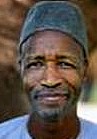
afrol News, 4 May - Mali's well-known democracy and good-governance activist Ousmane Sy yesterday was honoured by the royal couple of Belgium as he received this year's 'King Baudouin International Development Prize'. Mr Sy was said to have "radically transformed the political landscape in Mali by promoting grassroots democracy."
The 56-year-old Malian yesterday was honoured by the King Baudouin Foundation at a gala reception in Brussels, attended by the King and Queen of Belgium. Here, he received the foundation's International Development Prize, worth 150,000 euros, which is awarded every other year to persons or organisations that have "made a substantial contribution to the development of countries in the southern hemisphere."
Mr Sy is one of the key figures in decentralisation and reform of governance in Mali. Spokesperson Galit Gun-Epelstein of the foundation told afrol News that Mr Sy had "radically transformed the political landscape in Mali by promoting grassroots democracy through consensus at the village level."
Specifically, said Ms Gun-Epelstein, "he has personally increased the number of registered municipalities in Mali from 13 to 703. He did this by working with village elders at over 11,000 villages and getting their consent and support for the democratic system, which they then promoted in their respective villages."
The concrete benefits of this work had been the construction of wells, health centres and schools, while the more abstract improvements include a surge in participatory democracy across the country, better education, and a lessening of corruption and the autocratic power of the central government, according to the Belgian foundation.
According to a statement by Mr Sy, the decentralisation promoted by him has been a key to the consolidation of democracy in Mali. Decentralisation "secures the process at local level by submitting democratisation to the test of reality on a local scale," he explains. "It also constitutes a lever to make the local economy more dynamic by moving the political decision-making level closer to local agents," Mr Sy adds.
There is no lack of results: "The decision-makers are now the people on the ground, local people, and not those appointed by central government," Mr Sy details. "Local authorities may also be challenged in regional languages: decentralisation has acted as a synonym for the recognition of linguistic and cultural diversity," he adds.
Mr Sy's projects had also contributed to peace in Mali, the Belgian foundation says. "The decentralisation project was used as a basis for negotiations with rebel Tuareg movements in the North. It satisfied the demands of these movements regarding the acknowledgement of their existence," the foundation says in a statement.
Mali's successful decentralisation programme is now also considered an exportable model. Mr Sy reveals that he is now involved in experiments in Chad and Togo. "But I am not providing any recipes," he however emphasises. "The most important concept is to put forward a process, an approach," Mr Sy explains.
In his Togo and Chad programmes, Mr Sy says that "the first principle that we can explain to others is that we took decentralisation on board as political reform, and not simply as administrative reform. The second principle is that we agreed to open up reform to all levels of the population, and, to this end, we focused most strongly on communication. The third principle is that we must agree to level out all issues, while obviously ensuring that this does not tear the country apart."
The Malian said he was "extremely flattered" for being awarded the 'King Baudouin International Development Prize' for his work. "It comes as recognition of an accomplished task – not for myself, because obviously I did not carry out this task alone – but for all the teams I have worked with, and for all those who rallied around me," Mr Sy said. He hoped the prize will lend "fresh visibility" to his activities.
afrol News - It is called "financial inclusion", and it is a key government policy in Rwanda. The goal is that, by 2020, 90 percent of the population is to have and actively use bank accounts. And in only four years, financial inclusion has doubled in Rwanda.
afrol News - The UN's humanitarian agencies now warn about a devastating famine in Sudan and especially in South Sudan, where the situation is said to be "imploding". Relief officials are appealing to donors to urgently fund life-saving activities in the two countries.
afrol News - Fear is spreading all over West Africa after the health ministry in Guinea confirmed the first Ebola outbreak in this part of Africa. According to official numbers, at least 86 are infected and 59 are dead as a result of this very contagious disease.
afrol News - It is already a crime being homosexual in Ethiopia, but parliament is now making sure the anti-gay laws will be applied in practical life. No pardoning of gays will be allowed in future, but activist fear this only is a signal of further repression being prepared.
afrol News / Africa Renewal - Ethiopia's ambitious plan to build a US$ 4.2 billion dam in the Benishangul-Gumuz region, 40 km from its border with Sudan, is expected to provide 6,000 megawatts of electricity, enough for its population plus some excess it can sell to neighbouring countries.










 front page
| news
| countries
| archive
| currencies
| news alerts login
| about afrol News
| contact
| advertise
| español
front page
| news
| countries
| archive
| currencies
| news alerts login
| about afrol News
| contact
| advertise
| español