afrol News / Gender Links, 20 October - Gay and lesbian rights group in South Africa are outraged about a bill before parliament that falls a step short of granting full marriage to same-sex couples. The proposed Civil Union Bill aims to establish a separate legal institution for same-sex couples.
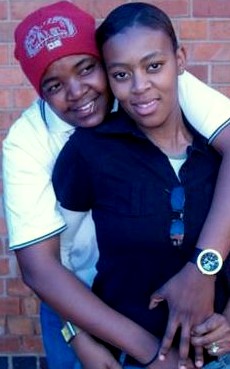
For couples like Mapaseka Letsike and her partner Lesego Magwai, the separate legal structure is not good enough. "Marriage is not just about legal rights," says Ms Letsike. "The law should recognise the humanity of everybody, in the same way," she adds.
OUT LGBT Well-being, a South African non-governmental organisation that provides mental and sexual health services to lesbian, gay, bisexual and transgender people, argues that the Civil Union Bill continues to subject lesbian and gay relationships into a second-class citizenry status. They say that suggesting that same-sex marriage requires a separate institution perpetuates stereotypes of same-sex marriages as unequal.
OUT contends that the Bill does not honour the December 2005 Constitutional Court judgment that declared both the common law definition of marriage and the marriage formula in the existing Marriage Act of 1961 to be unconstitutional.
In his judgment on 1 December 2005, Constitutional Court Justice Albie Sach, stated that, "In a context of patterns of deep past discrimination and continuing homophobia, appropriate sensitivity must be shown to providing a remedy that is truly and manifestly respectful of the dignity of same-sex couples."
The Draft Marriage Amendment Bill issued by the Ministry of Home Affairs in August this year proposed a gender-neutral amendment that would include same-sex couples into the current Marriage Act of 1961. However, this proposal caused much controversy in the South African public and the ruling ANC party and was shelved.
The Pretoria cabinet, instead, approved the Civil Union Bill. In summary, the Civil Union Bill would include all the rights and responsibilities of marriage, yet relationships would take on a different legal form and have a different name - "civil partnerships". Whilst same-sex couples may request the marriage officer to pronounce them "married", the law will not recognise the relationship as a marriage.
"For decades, apartheid legislators wanted us to believe that separate legal frameworks were required to deal with different population groups," says Melanie Judge, programme manager of OUT. "The Civil Union Bill is a throwback to such 'separate development' thinking. In its rather contradictory and convoluted manner, it provides the legal benefits of marriage but doesn't go as far as to say that same sex couples will be deemed married in the eyes of the law."
For some, the difference that the wording makes for their family and community is significant. A lesbian couple who both come from traditional families mentioned that their families believe that marriage is the foundation for raising a stable family. "For us, it will be very difficult to raise a family that will be accepted and recognised by our parents and families if we are not married."
For both heterosexual and same-sex couples, marriage is a way of publicly celebrating their love and commitment to each other, gay activists hold. The symbol of the union is just as important as the legal rights that go with marriage, they add.
Significantly, the Civil Union Bill is a progressive move toward the regulation of domestic partnerships. This will go a long way in extending legal protection for the most vulnerable members in the domestic sphere, women and children. Also, the legal benefits that flow from civil and domestic partnerships will provide additional protection to couples - including same sex couples - including the right to intestate succession and medico-legal decisions.
Yet, there is a legal point of having a separate institution. The Bill implies that marriage cannot be administered equally with same-sex marriages, thus entrenching stigmatisation and prejudice toward same-sex couples - perceived to be of a lower social status.
Discrimination continues to have severe consequences for the mental health and physical health of many gays and lesbian. Valid and reliable South African research has shown that 20 percent of lesbian and gay people in the Gauteng province, surrounding Johannesburg, have attempted suicide in the past, and 40 percent have experienced verbal harassment because of their sexual orientation.
Gay activists therefore hold that the Civil Union Bill does not go far enough. The fact that benefits will flow from a separate institution that looks like marriage, but in essence is not, remains a problem and test for equality, they maintain, adding that what is at stake is equality in the social status of same and opposite sex marriages.
By Fikile Vilakazi Ms Vilakazi is the Advocacy Officer at OUT LGBT Well-being. OUT is an NGO that provides mental and sexual health service to lesbian, gay, bisexual and transgender people. OUT also engages in advocacy, research and mainstreaming programmes aimed to reduce homophobia.
afrol News - It is called "financial inclusion", and it is a key government policy in Rwanda. The goal is that, by 2020, 90 percent of the population is to have and actively use bank accounts. And in only four years, financial inclusion has doubled in Rwanda.
afrol News - The UN's humanitarian agencies now warn about a devastating famine in Sudan and especially in South Sudan, where the situation is said to be "imploding". Relief officials are appealing to donors to urgently fund life-saving activities in the two countries.
afrol News - Fear is spreading all over West Africa after the health ministry in Guinea confirmed the first Ebola outbreak in this part of Africa. According to official numbers, at least 86 are infected and 59 are dead as a result of this very contagious disease.
afrol News - It is already a crime being homosexual in Ethiopia, but parliament is now making sure the anti-gay laws will be applied in practical life. No pardoning of gays will be allowed in future, but activist fear this only is a signal of further repression being prepared.
afrol News / Africa Renewal - Ethiopia's ambitious plan to build a US$ 4.2 billion dam in the Benishangul-Gumuz region, 40 km from its border with Sudan, is expected to provide 6,000 megawatts of electricity, enough for its population plus some excess it can sell to neighbouring countries.










 front page
| news
| countries
| archive
| currencies
| news alerts login
| about afrol News
| contact
| advertise
| español
front page
| news
| countries
| archive
| currencies
| news alerts login
| about afrol News
| contact
| advertise
| español