Get news alerts Login Central AfricaEast AfricaHorn of AfricaIndian OceanNorth AfricaSouthern AfricaWest AfricaAfrica / World Agriculture - NutritionCulture - ArtsEconomy - DevelopmentEnvironment - NatureGay - LesbianGender - WomenHealthHuman rightsLabourMediaPoliticsScience - EducationSocietyTechnologyTravel - Leisure From Behind By Country By Topic Chronological Press Releases Partner Media Contact Us


See also:
» 15.02.2010 - Kibaki overrules PM’s decision
» 14.01.2010 - Kenya to sell shares in 5 sugar companies
» 22.12.2009 - Kenya to counter Tanzania's Ivory sales proposal
» 21.12.2009 - Environmentalists fight developments in Tana River
» 18.12.2009 - Union calls for resignation of education minister
» 16.12.2009 - Kibaki orders investigation into missing school funds
» 11.12.2009 - Britain bans 20 Kenyan officials
» 25.11.2009 - Kenya cuts lending rate to 7 percent


Kenya | Africa
Politics | Economy - Development | Environment - Nature

Africa advised against coal power

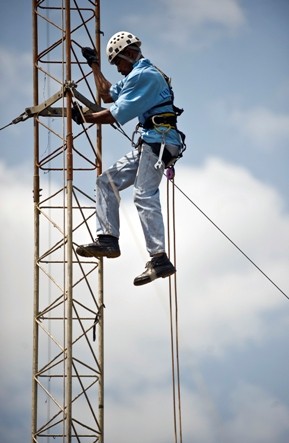
Electrical technician doing repair works

Electrical technician doing repair works in Liberia

© UN Photo/Christopher Herwig
afrol News, 19 March
- As coal power stations are demolished, due to environmental damages, in many countries, they are being offered as a "cheap energy supply" for Africa. But specialists warn this will be expensive in the long run, especially as fresh funds are available for renewable energies.

Achim Steiner, leader of the UN's Kenya-based environmental agency UNEP, at a speech in Nairobi today warned governments of Kenya and other African countries not to invest in coal power plants.

Kenya, like most other African countries, is desperate to improve its energy production and supplies. Mr Steiner advised governments to make well-founded strategy decisions before investing in new energy infrastructures. The question was whether to buy diesel or coal-fired power stations, or rather "pursue a clean and high tech route."

"Many companies would be keen to sell fossil fuel power stations to Kenya," said Mr Steiner. "They have these old technologies as it were on the shelf and would be delighted to dust them down and ship them to East Africa."

For Kenya or for any country in Africa, "they may at first glance look like a cheaper option," the UNEP leader admitted. But Kenya has no coal, oil or natural gas, "so these will have to be imported day in and day out at prices which may one year be US$ 40 a barrel and next year US$ 150 a barrel or more," he warned policy-makers.

Mr Steiner rather advised that "a cool, more calculating and more long term analysis of costs and benefits can give very different results if a wider, Green Economy lens is used." Contrasting imported fossil fuels, "the wind, the sun and the geothermal are indigenous 'fuels' which are essentially free and price-wise stable," he explained.

Renewables were further said to represent "one of the fastest ways to get electricity to the poor and rural communities, so they can quickly fire up development and overcome poverty." Finally, among the "abundant reasons to choose this option," figured less air pollution, thus less sickness and health care costs, Mr Steiner summed up.

There only r
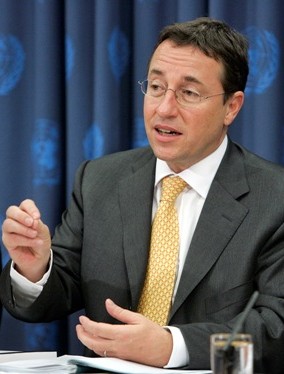
UNEP leader Achim Steiner

Achim Steiner, Executive Director of the UN Environment Programme (UNEP)

© UN Photo/Ryan Brown
emained the question of how the additional, up front costs to invest in renewable energies could be paid for in Kenya and other African countries with strained budgets.

A new avenue of possibilities just was about to open, the UNEP leader explained; the international carbon market.

In Kenya, the carbon trade already had financed new power supply, he said. It had caused the geothermal taking off in Naivasha, and it was one of the main reasons why Africa had "a big stake" in the UN-led climate change negotiations. Only a few weeks ago, international carbon market support was also announced for the 300 MW wind power project under development in Turkana, set to become Africa's largest wind farm.

African governments could also "play a key role in creating the right kinds of conditions that will attract carbon market investors: not subsidies, but smart market mechanisms," Mr Steiner said. Experiences on that were currently made in Kenya, he noted.

This willingness to invest in African renewable energy through the carbon trade is confirmed by researchers. John Kilani, Director of a UN-supported Sustainable Development Mechanisms programme, notes "there is a growing number of projects in Africa and a growing number of countries hosting projects. What is more, some project developers are even prepared to pay a premium for offset credits originating from Africa, no doubt because they are confident in the long-term growth prospects" for renewable energy on the continent.

"Investors in compliance and voluntary markets alike are seriously interested in good quality African emissions reduction projects, to balance their portfolios and meet their climate change strategies," agrees Henry Derwent, CEO of the Nairobi-based International Emissions Trading Association.


- Create an e-mail alert for Kenya news
- Create an e-mail alert for Africa news
- Create an e-mail alert for Politics news
- Create an e-mail alert for Economy - Development news
- Create an e-mail alert for Environment - Nature news

    E-mail this to a friend     Printable version

Related pages and feature
Current afrol News Top Stories
Kenya
Africa
Politics
Economy - Development
Environment - Nature
Economy
Energy
Infrastructure
Pollution
There are currently no news articles published related to this section.


top of page about afrol News | news | countries | archive | services | feed back | español 

© afrol News. Reproducing or buying afrol News' articles.

   You can contact us at mail@afrol.com