afrol News, 7 October - Sudanese leaders have indicated it could e difficult to comply with the tight timetable to organise a referendum over the secession of South Sudan by 9 January. Now, the South threatens to go ahead with the vote alone, if necessary.
According to the Sudanese north-south peace agreement, on 9 January the inhabitants of southern Sudan will vote on whether to secede from the rest of the country, while the residents of the central area of Abyei will vote on whether to be part of the north or the south.
The UN Security Council is currently touring Sudan, with a special focus on Darfur and the upcoming plebiscites. The Council had been upset by indications from the Khartoum government that the two upcoming referenda could be delayed due to technical problems.
The Council, visiting the southern capital Juba, "today stressed that the two referenda scheduled for January must be held on time, in a peaceful environment and according to the provisions of the peace agreement that ended the war between the north and the south," according to reports from the UN.
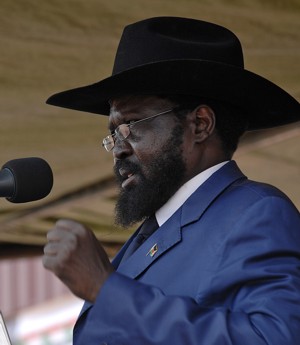
In Juba, southern President Salva Kiir gave a clear signal to the Security Council delegation. According to British Council member Mark Lyall Grant, President Kiir said that if there was a delay induced by the Khartoum government, "it might be necessary for the south to hold their own referendum; go ahead with the referendum in any event."
President Kiir however had emphasised that he was not going to be declaring a unilateral declaration of independence if the plebiscite is delayed.
As there are warnings from think-tanks, church societies and humanitarian agencies about the risk of renewed war if the January referenda fail, the UN Security Council members urged both President Kiir and his northern counterparts to stick to every detail in the peace agreement, while promising further assistance from the UN.
Meanwhile, the Khartoum government is accusing President Kiir of "going against the" 2005 peace agreement as he earlier this month had stated he would vote in favour of independence. Mr Kiir, who is also Vice President of Sudan, according to the peace deal is obliged to make the unity option "attractive".
The major concern about the timetable, however, is that the north and south still have failed to work out an agreement on how to share oil revenues in the border areas after a foreseen split. The oil-rich border region could be the new source of a war even after a successful referendum, many observers fear.
After two days in Juba, the UN Security Council delegation travelled to Darfur today, from where they will proceed to Khartoum before completing their Sudan mission on Saturday. It is still not clear whether they will meet with President Omar al-Bashir, who is wanted by the ICC for war crimes in Darfur.
afrol News - It is called "financial inclusion", and it is a key government policy in Rwanda. The goal is that, by 2020, 90 percent of the population is to have and actively use bank accounts. And in only four years, financial inclusion has doubled in Rwanda.
afrol News - The UN's humanitarian agencies now warn about a devastating famine in Sudan and especially in South Sudan, where the situation is said to be "imploding". Relief officials are appealing to donors to urgently fund life-saving activities in the two countries.
afrol News - Fear is spreading all over West Africa after the health ministry in Guinea confirmed the first Ebola outbreak in this part of Africa. According to official numbers, at least 86 are infected and 59 are dead as a result of this very contagious disease.
afrol News - It is already a crime being homosexual in Ethiopia, but parliament is now making sure the anti-gay laws will be applied in practical life. No pardoning of gays will be allowed in future, but activist fear this only is a signal of further repression being prepared.
afrol News / Africa Renewal - Ethiopia's ambitious plan to build a US$ 4.2 billion dam in the Benishangul-Gumuz region, 40 km from its border with Sudan, is expected to provide 6,000 megawatts of electricity, enough for its population plus some excess it can sell to neighbouring countries.










 front page
| news
| countries
| archive
| currencies
| news alerts login
| about afrol News
| contact
| advertise
| español
front page
| news
| countries
| archive
| currencies
| news alerts login
| about afrol News
| contact
| advertise
| español