See also:
» 20.11.2010 - Mozambique smelter ignores pollution limits
» 01.03.2010 - Mozambique to carry out agric census to gauge poverty
» 11.01.2010 - Benga coal mining approved
» 22.05.2009 - Mozambique's refinery project hit by a cash setback
» 18.05.2009 - Australia to donate 4250 Lapdesks to a Maputo school
» 13.05.2009 - IMF recommends a fiscal stimulus for Mozambique
» 15.04.2008 - China invests $60 million in Mozambique
» 03.04.2008 - Climate change threatens Africa


SQL/DB Error -- [Unknown table engine 'InnoDB']
Mozambique
Economy - Development | Politics | Society

Mozambique drug barons "protected by President"

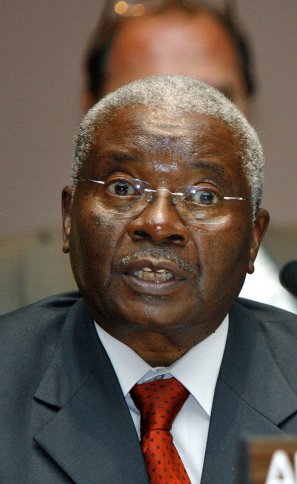
Mozambique President Armando Emílio Guebuza is said to gain from the country's growing narcotics trade

© Paulo Filgueiras/UN Photo/afrol News
afrol News, 10 December
- Mozambique is becoming a major narcotics transit point in Africa, with US diplomatic sources pointing at two of country's main businessmen as drug barons. Both are protected by the President.

Former Mozambican President Joaquim Chissano and current President Armando Guebuza are put in direct connection with the country's largest narco-traffickers in several wires from the US embassy in Maputo, now published by Wikileaks.

The US reports from 2009 and early 2010 even directly involve President Guebuza, his majority owned company Insitec and the ruling party FRELIMO directly in the country-wide corruption allowing drugs to enter Mozambique freely from South Asia.

The Maputo embassy agrees that Mozambique, after Guinea-Bissau, is the second largest narcotics transit point in Africa. Pervasive corruption on all levels and a long, poorly controlled coast makes smuggling easy, while favourable channels to money laundering make the trade even more lucrative.

According to the US embassy and high level Mozambican sources, local businessman Mohamed Bashir Suleiman is the most important narco-trafficker in the country. He is described as "the head of a well financed organised crime and money laundering network centred on the family owned and managed business conglomerate Grupo MBS."

Mr Suleiman again is a close friend and ally of ex-President Chissano and President Guebuza. "In the licit economy, the ruling party, FRELIMO, and MBS work in tandem to control the legal and illegal economies and restrict the space for private sector growth by demanding a cut of all significant business transactions. In the illicit economy, MBS dominates money laundering and drug transhipment, providing kickbacks to FRELIMO," a prominent source told the US embassy.

The second narco-baron in Mozambique, according to the US embassy, is Ghulam Rassul Moti - "a Mozambique-based ethnic South Asian narcotics trafficker who has smuggled hashish and heroin in the Nampula province of Northern Mozambique since at least 1993." Also Mr Moti was directly sponsoring President Guebuza and FRELIMO.

In the north of the country, one of the many companies controlled by President Guebuza, Insitec, recently took over the management of Nacala port in Nampula province, the main transhipment point for narcotics from Asia.

Shortly thereafter, Mr Moti reportedly "greatly reduced bribes to local Nacala and Nampula municipal authorities and made the payments instead directly to senior FRELIMO officials. Nampula Mayor Castro Serafim was reported to be particularly irritated that these monthly payments had been re-routed straight to higher-level FRELIMO leaders," the US embassy cable says.

In the south, the primary route for cocaine is by air to Maputo from Brazil. Drugs from there mostly are smuggled overland to South Africa for local South African consumption or onward to Europe.

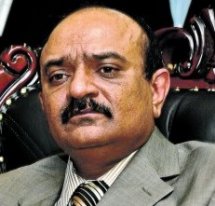
A

Mozambique businessman Mohamed Bashir Suleiman

© Savana/afrol News
t the airport and in southern Mozambican ports, corruption among minor customs officers and up to Head of Customs, Domingos Tivane, secures the entry of narcotics.

Several sources had confirmed that customs chief Tivane "openly demands and receives payoffs from importers," including Mr Suleiman. Mr Tivane was said to have "amassed a personal fortune in excess of a million dollars, to include numerous investments around Mozambique." One embassy source had stated that, when visiting Mr Tivane's "expansive home to deliver a bribe he noticed that the bureaucrat had solid gold fixtures in his bathroom."

Even the ruling party could be directly involved in drug smuggling, it was indicated. At the ports, FRELIMO was said to have its own clearing agent that handles FRELIMO and Mr Suleiman's business. "The clearing agent chronically under-invoices items, avoids the 17 percent VAT, and also has an arrangement with Tivane's Customs authorities to bypass the ports' mandatory scanning."

US embassy staff had addressed their concerns about the growing narco-traffic in Mozambique with officials at all levels. However, lower officials wanting to address the problem said they were confronted with corruption at high levels. A high level law enforcement official in private had told the US embassy that "some fish are too big to catch."

Meanwhile, drug traffickers "routinely bribe Mozambique police, immigration and customs officials in order to get the drugs into the country," the US embassy reported. "A high level law enforcement official admits most police drug seizures are not reported to his office because traffickers and police make on-the-spot arrangements to allow the drugs to continue to flow."

Police and customs officials routinely detained drug smugglers and "are then bribed to release the smugglers and the drugs are confiscated and resold," the report goes on.

Senior members of the ruling FRELIMO party were "seeking to hide the level of corruption from the press, the electorate and the international donor community," US Charge d'Affaires Todd Chapman reported in 2009.

A source close to President Guebuza in January this year added that "in the past few years there have been several embarrassing situations in which shiploads of drugs, primarily hashish and heroin have washed ashore; however, the media is usually afraid to report on such incidents because no one wants to become another Carlos Cardoso."

Mr Cardoso was courageous Mozambican journalist who was murdered in 2000 while investigating a massive bank fraud tied to then-President Chissano's family. The independent newspapers 'Zambeze' and 'Savana' however have made some reports on the issue.


- Create an e-mail alert for Mozambique news
- Create an e-mail alert for Economy - Development news
- Create an e-mail alert for Politics news
- Create an e-mail alert for Society news


    Printable version

On the Afrol News front page now


UN will not monitor human rights in Western Sahara

afrol News - The US has backed down on its demand that UN peacekeepers in Moroccan-occupied Western Sahara also shall monitor the human rights situation after Moroccan sources threatened to scale down relations with Washington.
Central African Republic
Central African Republic falling apart

afrol News - One month after the rebel movement Séléka took over power in the Central African Republic, unrest is spreading in the country. The new leader lacks control of his forces, which continue looting and abusing civilians.
Kenya
Kenyatta secures tight victory in Kenya

afrol News - The official election results in Kenya have finally been announced, and Uhuru Kenyatta managed to win the first poll round outright with a narrow 50.7 percent. But the main opponent, PM Raila Odinga, is filing a vote rigging complaint to the courts.
Cape Verde
Cape Verde to produce dragon fruit

afrol News - Cape Verde authorities have invested large sums to diversify the arid country's agricultural sector. Now, the dragon fruit, originating in tropical America, is being introduced for the first commercial production in Africa.
Egypt
Even governors in Pharaonic Egypt died in their 20s

afrol News - Researchers have analysed more than 200 mummies from ancient Egypt, finding that even high dignitaries were poorly nourished and had infectious diseases. The typical governor in Pharaonic Egypt died before he was 30 years old.


front page | news | countries | archive | currencies | news alerts login | about afrol News | contact | advertise | español 

©  afrol News. Reproducing or buying afrol News' articles.

   You can contact us at mail@afrol.com