See also:
» 30.09.2010 - Tortoise poaching boosted by Malagasy chaos
» 09.06.2010 - Madagascar political chaos causing forest extinction
» 15.04.2010 - Madagascar coup leaders may face ICC prosecution
» 12.03.2010 - Illegal logging "funding Madagascar coup govt"
» 25.11.2009 - UN makes $6 million for Madagascar’s cyclone forecasts
» 23.09.2009 - Malagasy NGOs unite against plunder of natural resources
» 27.07.2009 - Madagascar’s humanitarian appeal revised down
» 13.12.2006 - Madagascar "coup leader" rounded up


Madagascar
Society | Environment - Nature

Madagascar illegal logging continues

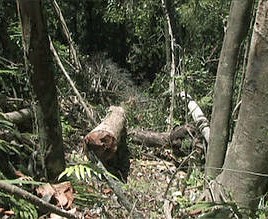
Precious hardwoods such as rosewood and ebony are logged from Madagascar's protected rainforests

© WWF Madagascar/afrol News
afrol News, 17 January
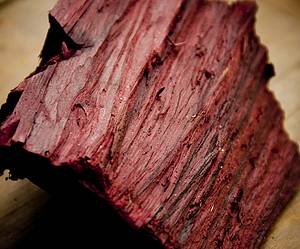
- Since Madagascar's 2009 coup, illegal logging of precious rosewood in the island's protected forests has exploded. A promise by coup President Andry Rajoelina to act to stop this logging has not been held, environmentalists say.

Until the 2009, Madagascar saw large improvements in the management of its unique forests, with large areas being protected and strict enforcement of logging restrictions. After Mr Rajoelina came to power and Madagascar was internationally isolated, illegal logging and devastation of protected areas saw a new boom.

Malagasy and international environmentalist groups since then have tried to put pressure on President Rajoelina. In a meeting in October last year, the Mr Rajoelina promised to make an official declaration to stop all illegal logging of precious woods. Further, he promised resources would be made available to support local authorities to implement appropriate management plans to secure the forests in the future.

"However, no such public declaration has been made to date, and illegal logging continues to devastate the island's precious and fragile environment," according to the environmentalist group WWF.

"Andry Rajoelina told us he wanted to stop illegal logging. He also said he wanted to call on countries who import the timber, and especially China, not to buy rosewood products anymore and is ready to co-finance actions to stop illegal logging with government funds," says Niall O'Connor, Regional Representative of WWF Madagascar.

"Now is the time for action. WWF urges him and the government to deliver what they promised," Mr O'Connor added. The environmentalist had presented the Malagasy government with 5,000 signatures from a petition to stop illegal logging of precious woods in Madagascar.

More than 20,000 hectares of forests, inside protected areas, have been dev

Rosewood from Madagascar

© Chris Maluszynski/WWF/afrol News
astated following political turmoil in 2009, with more than 100,000 precious wood trees illegally felled in some of the richest and most diverse forests on the planet.

A further estimated half a million more trees have been cut, to float the heavy logs downstream, causing extensive damage and species loss.

The illegal activity destroys forests and the services they provide to local communities. It also affects the tourism industry that traditionally benefited these parts of the island's north eastern humid forests and which has provided local people with jobs and a regular income in the past.

A ban on rosewood export has recently been published in Madagascar. But, according to the latest reports from WWF, the cutting of precious woods in north-eastern Madagascar has not yet stopped. Exports have decreased, but exploiters are stock piling wood in the hope of an exceptional export authorisation to be made in the future.

These illegal activities in Madagascar's national parks bring even more problems with them. A recent field visit conducted by Missouri Botanical Garden revealed that up to 10,000 people are currently living inside Masoala National Park.

The rosewood trafficking, coupled with the government weakness to ban it, initiated and extended drastically the traffic of natural resources in Madagascar. Countless endemic species such as tortoises and lemurs are heavily exploited these days.

Furthermore countless numbers of lemurs and other bush meat have been butchered and eaten by loggers during their stay in the parks, according to reports from local environmentalists.


- Create an e-mail alert for Madagascar news
- Create an e-mail alert for Society news
- Create an e-mail alert for Environment - Nature news


    Printable version

On the Afrol News front page now


UN will not monitor human rights in Western Sahara

afrol News - The US has backed down on its demand that UN peacekeepers in Moroccan-occupied Western Sahara also shall monitor the human rights situation after Moroccan sources threatened to scale down relations with Washington.
Central African Republic
Central African Republic falling apart

afrol News - One month after the rebel movement Séléka took over power in the Central African Republic, unrest is spreading in the country. The new leader lacks control of his forces, which continue looting and abusing civilians.
Kenya
Kenyatta secures tight victory in Kenya

afrol News - The official election results in Kenya have finally been announced, and Uhuru Kenyatta managed to win the first poll round outright with a narrow 50.7 percent. But the main opponent, PM Raila Odinga, is filing a vote rigging complaint to the courts.
Cape Verde
Cape Verde to produce dragon fruit

afrol News - Cape Verde authorities have invested large sums to diversify the arid country's agricultural sector. Now, the dragon fruit, originating in tropical America, is being introduced for the first commercial production in Africa.
Egypt
Even governors in Pharaonic Egypt died in their 20s

afrol News - Researchers have analysed more than 200 mummies from ancient Egypt, finding that even high dignitaries were poorly nourished and had infectious diseases. The typical governor in Pharaonic Egypt died before he was 30 years old.


front page | news | countries | archive | currencies | news alerts login | about afrol News | contact | advertise | español 

©  afrol News. Reproducing or buying afrol News' articles.

   You can contact us at mail@afrol.com