afrol News, 11 February - No talk of a Tunisia or Egypt-style revolutions in Equatorial Guinea. These were the orders given to media in the country, which all are controlled by the state or the family of President Teodoro Obiang Ngeuma.
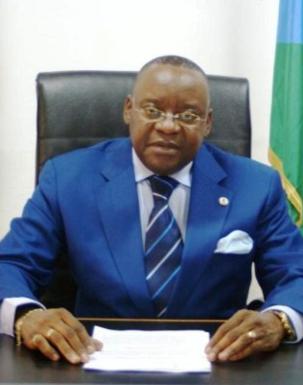
Equatoguinean Information Minister Jerónimo Osa Osa is reported to have given direct orders to the staff at the Radiotelevision of Equatorial Guinea (RTVGE) to stop mentioning the events in Tunisia and Egypt, according to the Madrid-based Association for Democratic Solidarity with Equatorial Guinea (ASODEGUE).
Noting the sudden lack of updates from the revolutionary events in Egypt, eagerly followed throughout Africa, members of the marginalised Equatoguinean opposition had contacted staff working at RTVGE. They were told that "the Minister of Information personally has given orders that we shall say no more about it."
Equatorial Guinea thereby joins the few countries worldwide, including China and Eritrea, that prevent the population to learn about the dynamics of revolution in North Africa.
Parallel to China and Eritrea, the government of Equatorial Guinea has total control of the information that reaches its population. Access to foreign media is strongly restricted, with even radio broadcasts from the ex-colonial power Spain being blocked and foreign magazines being censored.
Contrasting China, Equatorial Guinea however does not have an active internet censorship, probably due to lack of resources and due to the low impact of the web in the country. According to recent research published by afrol News, only 2 percent of the Equatoguinean population has access to internet, representing the - mostly pro-government - elite in the country.
Meanwhile, Paris-based Reporters sans frontičres (RSF) recalls that "in Equatorial Guinea, no private media exist in practical terms. Journalists in state media are obliged to reproduce government propaganda." RSF has disclosed how state journalists are fired from one day to another just for not showing enough enthusiasm praising President Obiang.
afrol News - It is called "financial inclusion", and it is a key government policy in Rwanda. The goal is that, by 2020, 90 percent of the population is to have and actively use bank accounts. And in only four years, financial inclusion has doubled in Rwanda.
afrol News - The UN's humanitarian agencies now warn about a devastating famine in Sudan and especially in South Sudan, where the situation is said to be "imploding". Relief officials are appealing to donors to urgently fund life-saving activities in the two countries.
afrol News - Fear is spreading all over West Africa after the health ministry in Guinea confirmed the first Ebola outbreak in this part of Africa. According to official numbers, at least 86 are infected and 59 are dead as a result of this very contagious disease.
afrol News - It is already a crime being homosexual in Ethiopia, but parliament is now making sure the anti-gay laws will be applied in practical life. No pardoning of gays will be allowed in future, but activist fear this only is a signal of further repression being prepared.
afrol News / Africa Renewal - Ethiopia's ambitious plan to build a US$ 4.2 billion dam in the Benishangul-Gumuz region, 40 km from its border with Sudan, is expected to provide 6,000 megawatts of electricity, enough for its population plus some excess it can sell to neighbouring countries.










 front page
| news
| countries
| archive
| currencies
| news alerts login
| about afrol News
| contact
| advertise
| español
front page
| news
| countries
| archive
| currencies
| news alerts login
| about afrol News
| contact
| advertise
| español