See also:
» 04.03.2011 - Malawi continues war on donors
» 20.07.2009 - Malawi's opposition petition thrown out of court
» 21.05.2009 - Malawi's Muthakira assured of second term
» 20.05.2009 - Malawi oppposition calls for ballot recount
» 14.05.2009 - Malawi's opposition cry foul even before poll starts
» 09.04.2009 - Malawi opposition forms pact against Mutharika
» 08.04.2009 - Muluzi battling 'shame and glory' in courts
» 29.08.2008 - Malawi's budget finally approved


Malawi
Politics | Human rights | Society

Malawi govt pressured by protests, donors

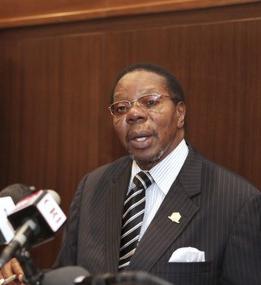
Malawi President Bingu wa Mutharika

© Malawi Finance Min/afrol News
afrol News, 15 February
- As a wave of social protests started yesterday in Malawi, the impoverished country's main donors are withholding aid over repressive media and anti-gay laws.

Yesterday, the long announced anti-government protests kicked off in Malawi's capital Lilongwe and in the northern town of Mzuzu. The main demand was for government to address high fuel prices and shortages, causing a large black fuel market in Malawi.

But the estimated 2,000 protesters - far less than expected - also included human rights activists protesting against the deteriorated rights situation and opposition groups calling for President Bingu wa Mutharika to step down.

The protests - somewhat inspired by events in Tunisia and Egypt and heavily propagated through social media - were met by a nervous government and had been prohibited by city authorities in both Lilongwe and Mzuzu. Riot police in Lilongwe almost outnumbered protesters, using massive force to disperse the manifestation.

"It was scaring to see the force that the police unleashed for this demonstration," Malawian journalist Francis Sitima reported from Lilongwe. "I have never seen such a number of policemen around any function and the armoury," he added.

The most prominent protesters were singled out by police and detained. This included leaders of the Malawian Human Rights Consultative Committee (HRCC), the leader of the country's Congress of Trade Union and organisers of the protests.

But protesters promise to keep the pressure up. HRCC leader Undule Mwakasungula, after being released from detention, promised "in two weeks, we will demonstrate across the country."

"They will shoot us, kill us but we will not relent," the human rights activist added. Mr Mwakasungula strongly protested the violent suppression of the peaceful protests, telling President M

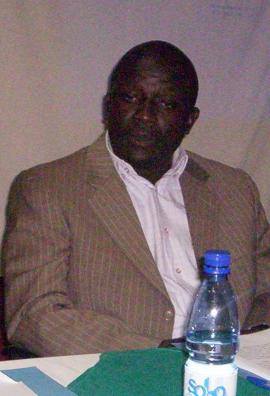
Malawi human rights activist Undule Mwakasungula

© CRIDOC/afrol News
utharika that "this country is not a one man project."

The violent response to the protests and the detention of human rights and trade union leaders only add to the widespread impression that Malawi is turning more repressive. Not only Malawian protesters are now putting pressure on government to respect human rights - also Malawi's main donors are presenting a united front.

Malawi is among the world's most aid dependent nations. During the governance of President Mutharika - a former IMF official - aid levels from Western donors have steadily grown as Malawi has been seen to make progress regarding economic policies, the fight against corruption and in democracy and human rights issues.

This trend however has now stopped, with Western donors now agreeing that Malawi is experiencing major setbacks regarding human rights. Two issues add to the violent response to the protests: more repressive media laws and the criminalisation of gay and lesbian sexual relations.

Germany has taken a lead. Currently, euro 2.5 million of German budget aid for Malawi for 2010 are still held back and a further euro 5 million in budget aid for 2011 have been frozen. Deputy Development Minister Gudrun Kopp has just cancelled her planned trip to Malawi, quoting human rights setbacks.

The frozen aid funds would only be released when "the democratisation process sees positive developments," stated Ms Kopp. Currently, she explained the cancellation of her visit, there was "a lack of willingness towards a constructive dialogue over different laws by the Malawian government," referring to anti-gay legislation and media regulations.

The German move is p

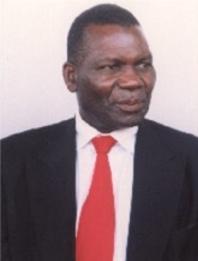
Malawi's Justice Minister George Chaponda

© Malawi govt/afrol News
art of a joint action by Malawi's eight main donors. France, Germany, Iceland, Ireland, Japan, Norway, the UK and the US last week presented government with a joint statement condemning "certain negative trends in the country," referring to the same legislation.

"As partners and friends, we would like to recall that good governance and respect for human rights - including freedom of expression, observance of democratic principles, and freedom from discrimination - are the foundation upon which our partnership is built," the statement reads.

The toughest message so far was given by the US aid agency MCC, which in January signed a record US$ 350 aid deal to renovate Malawi's energy sector, has decided to delay the release of these funds until clarifications were given about the new legislation. The MCC only releases its massive impacts to countries with high human rights standards.

Meanwhile, the Malawian government is doing its utmost to withstand the pressure mounting from all sides. President Mutharika told protesters "not to take inspiration" from Egypt, as the situation in Malawi was not comparable. Justice Minister George Chaponda insisted "We are not ready to change the laws to satisfy donors."

But others believe President Mutharika will soon have to bow into the massive pressure. Malawi's independent 'Capital FM' radio today reports donors are "closely monitoring the developments taking place in the country," and would be alienated by the harsh reactions to Monday's protests.

Without donor support, President Mutharika will be faced with deteriorating social problems and a stagnating economy, causing even more protests.


- Create an e-mail alert for Malawi news
- Create an e-mail alert for Politics news
- Create an e-mail alert for Human rights news
- Create an e-mail alert for Society news


    Printable version

On the Afrol News front page now


UN will not monitor human rights in Western Sahara

afrol News - The US has backed down on its demand that UN peacekeepers in Moroccan-occupied Western Sahara also shall monitor the human rights situation after Moroccan sources threatened to scale down relations with Washington.
Central African Republic
Central African Republic falling apart

afrol News - One month after the rebel movement Séléka took over power in the Central African Republic, unrest is spreading in the country. The new leader lacks control of his forces, which continue looting and abusing civilians.
Kenya
Kenyatta secures tight victory in Kenya

afrol News - The official election results in Kenya have finally been announced, and Uhuru Kenyatta managed to win the first poll round outright with a narrow 50.7 percent. But the main opponent, PM Raila Odinga, is filing a vote rigging complaint to the courts.
Cape Verde
Cape Verde to produce dragon fruit

afrol News - Cape Verde authorities have invested large sums to diversify the arid country's agricultural sector. Now, the dragon fruit, originating in tropical America, is being introduced for the first commercial production in Africa.
Egypt
Even governors in Pharaonic Egypt died in their 20s

afrol News - Researchers have analysed more than 200 mummies from ancient Egypt, finding that even high dignitaries were poorly nourished and had infectious diseases. The typical governor in Pharaonic Egypt died before he was 30 years old.


front page | news | countries | archive | currencies | news alerts login | about afrol News | contact | advertise | español 

©  afrol News. Reproducing or buying afrol News' articles.

   You can contact us at mail@afrol.com