


|
Morocco Politics | Human rights New Morocco protests planned
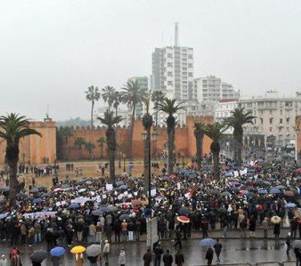
Already during the Sunday mass protests in Morocco, key groups gathered in front of the Rabat parliament announced that new protests would be held on Saturday and Sunday, 26 and 27 February. This was today confirmed by the Moroccan Human Rights Association (AMDH), calling for massive protests all over the country during the weekend.
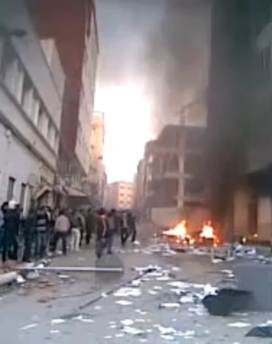
And as the first joy over Morocco's "Day of Dignity" demonstrations is settling, an increasing number of reports document that government repression in Morocco had followed the same lines as other Arab regimes; only executed in a more elegant and discrete way. For example, trains between Casablanca - Morocco's largest city - and nearby Rabat were cancelled during the period protesters could have used them to flock to the capital. Protest organiser Mohammed Elaoudi and many other activists saw their websites and e-mail accounts blocked. Foreign journalists covering the events report being tailed by intelligence agents. "Activists" on state TV declared that the protests were cancelled one day before. After the protests, the message is the same. While Moroccan media reported widely about the protests, they all refer to the official version. All disturbances are attributed to criminals, looters and drug addicts. Security forces had done nothing wrong. King Mohammed VI in a televised speech yesterday commented on the protests, insisting he would keep faithful to Morocco's "unique model of democracy and development," not bowing into "demagoguery and improvisation" as represented by the protest movement. For the masses of Moroccans, the messages from government so far are credible. Most people believe the protests were widely peaceful, only disturbed by looting criminals. However, discontent is rife and Sunday's protests also in Morocco helped to lift the barrier of fear. Protests like those on Sunday would not have been allowed befo
But there are also more and more people that have stopped believing in the government version. Organisers like the AMDH are increasingly angered. But, even worse, in the areas witnessing violence on Sunday, discontent may grow into an Egypt-like force as people for the first time in decades dear protesting. Sunday's deaths and injured may ignite deeper anger. Nucleus of anger The nucleus of discontent and unrest remains the northern Rif region and the central Atlas mountains; both historically disadvantaged regions dominated by the Berber minority. Especially in the Rif region, which includes the port city of Al-Hoceima where 5 persons were killed during the Sunday riots, resistance against the capital has deep roots. Indeed, the great political discussion in the Rif right now is whether the government or the King himself is responsible for the problems in Morocco. In forums, politically conscious Rif residents are discussing the way forward and whether to keep revolting until the King steps down. A person calling himself "Khattabi" in a Rif discussion forum urges people not to believe in the King's "false promises." Rather, he says, "we now have a golden opportunity to confront the government; an opportunity that may not present itself again." The future of Morocco's protest - whether they can become peaceful or violent - will probably be decided in the Rif region and around Marrakech, the unofficial Berber capital, next weekend. By staff writers © afrol News - Create an e-mail alert for Morocco news - Create an e-mail alert for Politics news - Create an e-mail alert for Human rights news
On the Afrol News front page now
|







 front page
| news
| countries
| archive
| currencies
| news alerts login
| about afrol News
| contact
| advertise
| español
front page
| news
| countries
| archive
| currencies
| news alerts login
| about afrol News
| contact
| advertise
| español
©
afrol News.
Reproducing or buying afrol News' articles.
You can contact us at mail@afrol.com