See also:
» 03.03.2011 - Calls for new Morocco protests on Sunday
» 27.02.2011 - Morocco protests halted by police violence
» 27.02.2011 - Investors fear Morocco riots
» 26.02.2011 - Mostly peaceful protests in Morocco today
» 22.02.2011 - New Morocco protests planned
» 21.02.2011 - Morocco does not escape violence
» 20.02.2011 - Large peaceful protests in Morocco
» 18.02.2011 - Travel market tense ahead of Morocco protests


SQL/DB Error -- [Unknown table engine 'InnoDB']
Morocco
Politics | Society | Human rights

Morocco protesters encouraged by King's speech

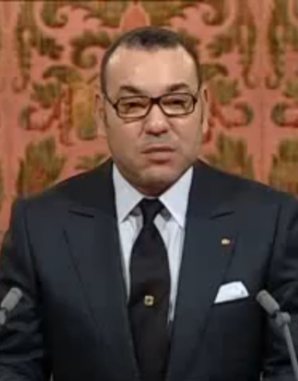
Moroccan King Mohammed VI speaking on state TV

© Morocco state TV/afrol News
afrol News, 10 March
- King Mohammed VI, with his speech announcing constitutional reforms, improved his ratings by the Moroccan pro-democracy movement. "It shows he is listening," say typical reactions.

The Moroccan King went far in compromising during his televised speech last night, addressing many of the issues raised by the pro-democracy movement. Mohammed VI previously had not been the main target for protesters, and his speech further increased his popularity.

In his speech, he promised to initiate "comprehensive reforms" in "continuing interaction" with all stakeholders, not including the youth and the protest movement. Reforms would build on the current "regionalisation process" furthering decentralisation of power, but also include constitutional reform.

"I call on everyone to continue contributing to this general plan to bring it to maturity, through a wide-ranging, constructive national debate," King Mohammed VI said, thus inviting also the protest movement and civil society groups to negotiate about how reforms could be implemented in detail.

The King urged for a "democratic constitution," which was to strengthen the separation of powers; assure an independent judiciary; seek free and fair elections; transferring royal powers over government to parliament; and assuring the rights of the Berber people.

A committee was now being set up to propose a new constitution by June. The process would end up in "a constitutional referendum," the King announced.

The royal announcement came close to fulfilling the main demand of the protest movement by Moroccan youths - the introd

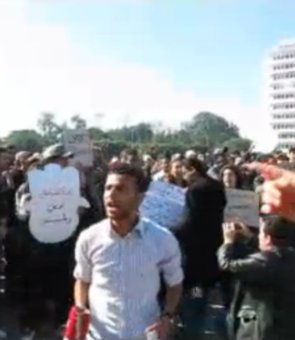
Several thousand protesters gathered in downtown Casablanca on 20 February

© Mamfakinch/afrol News
uction of a constitutional monarchy following the Spanish or British model and with very limited powers to the King. While addressing most of the democracy-related demands of he movement, King Mohammed VI however failed to comment demands regarding corruption and human rights.

Nevertheless, the first reactions by the protest movement have been widely positive. "Moroccans for Change" on social media during the day vividly have discussed the King's speech. Reactions had a wide span.

"Did King Mohammed VI join the 20 February movement for change?" asks one. "It is a good start. It means he is listening, and negotiating," commented another. Some were quick to add that "pressure for reforms will continue."

The most sceptical held that the King was never the problem, but the ruling "Makhzen" class, widely described as corrupt. "The Makhzen should start by the easiest deeds, which is freeing all political prisoners," one protester commented, noting that Morocco's dire human rights situation and systematic police brutality was not treated in the King's speech.

Generally, however, the reception of King Mohammed's speech was rather enthusiastic, boding well for a peaceful negotiation process towards a more democratic Morocco.

"Time will show," a protester commented, adding that the movement needed to keep up the pressure for reforms as the Makhzen would try to limit the extent of reform.


- Create an e-mail alert for Morocco news
- Create an e-mail alert for Politics news
- Create an e-mail alert for Society news
- Create an e-mail alert for Human rights news


    Printable version

On the Afrol News front page now


UN will not monitor human rights in Western Sahara

afrol News - The US has backed down on its demand that UN peacekeepers in Moroccan-occupied Western Sahara also shall monitor the human rights situation after Moroccan sources threatened to scale down relations with Washington.
Central African Republic
Central African Republic falling apart

afrol News - One month after the rebel movement Séléka took over power in the Central African Republic, unrest is spreading in the country. The new leader lacks control of his forces, which continue looting and abusing civilians.
Kenya
Kenyatta secures tight victory in Kenya

afrol News - The official election results in Kenya have finally been announced, and Uhuru Kenyatta managed to win the first poll round outright with a narrow 50.7 percent. But the main opponent, PM Raila Odinga, is filing a vote rigging complaint to the courts.
Cape Verde
Cape Verde to produce dragon fruit

afrol News - Cape Verde authorities have invested large sums to diversify the arid country's agricultural sector. Now, the dragon fruit, originating in tropical America, is being introduced for the first commercial production in Africa.
Egypt
Even governors in Pharaonic Egypt died in their 20s

afrol News - Researchers have analysed more than 200 mummies from ancient Egypt, finding that even high dignitaries were poorly nourished and had infectious diseases. The typical governor in Pharaonic Egypt died before he was 30 years old.


front page | news | countries | archive | currencies | news alerts login | about afrol News | contact | advertise | español 

©  afrol News. Reproducing or buying afrol News' articles.

   You can contact us at mail@afrol.com