afrol News, 8 March - The General Union of Algerian Workers (UGTA) has launched a nationwide campaign to organise women, the priority target group being women in the textile sector. Alongside this organising drive, the UGTA is also leading a campaign against sexual harassment and a campaign for the revision of Algeria's family code, as executive member Souad Charid explains.
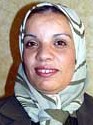
Ms Charid - in an interview by Natacha David of the worldwide ICFTU trade union movement - says that unions are involved in many issues related to improving women's rights in Algeria. As a member of the UGTA Executive and chair of the Women's Committee in Chlef, 200 km south of Algiers, and a member of the UGTA's National Women's Committee, Ms Charid knows what the main challenges are.
A vital problem is Algeria's family code, which dates back to 1984 - a time when pressure from militant Islamists was very strong. The code contains articles that give women the status of minors. "In this respect, it is unlawful, as it contravenes the Algerian constitution, which enshrines the right to equality," Ms Charid says.
According to the family code, for example, an adult woman cannot marry by civil law without her father's approval. "Women close to militant Islamic circles accept this principle, in the same way as they accept polygamy, something which we categorically refuse," Ms Charid says. "I travel to different regions to mobilise women, to raise awareness about why this is so important for women," she adds, explaining the UGTA campaign for the revision of the code.
UGTA is also waging a major campaign against sexual harassment. "In November 2004, we secured a new article in the Penal Code condemning sexual harassment," Ms Charid explains. "It was a great victory. But after this legislative victory we had to move on to the next phase - encouraging women to break the wall of silence," she adds. "This is the new phase of our campaign."
The UGTA executive holds that it is time for women to say 'enough is enough'! "In Arab societies in particular, we are the victims of age-old traditions. My mother lived through the same experiences as my grandmother. Things do not evolve the way they should. It's intolerable," Ms Charid complains.
A year ago, the Algerian trade union set up a call centre to listen and provide support to the victims of sexual harassment. By now, the UGTA has already registered over a thousand psychological support and counselling sessions. Also an information booklet has been widely distributed. "We have discovered that sexual harassment, which we had thought generally limited to the big cities, is, in fact, a problem that arises throughout the country," Ms Charid says.
Other prejudices also were invalidated. "We thought that certain groups of women, such as divorcees, for example, who are seen in a negative light which pushes them to the edge of society, would be the main victims. But not at all, we have realised that all women, married or not, are potential victims. We also thought that sexual harassment is generally directed towards young women, believing older women to be better protected. But not at all," Ms Charid explains.
Changing mentalities was "the hardest task" for UGTA regarding improving women's rights. "When I was working in the south of the country, a young boy, aged 10, called out to me in the street saying, 'Your face is not covered, have you no shame?' I was really shocked by that. It is going to take a long time to change such ideas," Ms Charid says.
Despite legislative equality between the sexes, in the world of work, it is still very difficult for Algerian women to reach positions of responsibility. Lack of childcare facilities is a major obstacle, the unionist holds. Women had to "do twice as much" to prove they were capable of taking on responsibilities in the workplace.
But there are several encouraging signs. Women's level of education in Algeria is high. There are, in fact, more women than men at university. In the long run, this is going to force a change. In political circles, women are really starting to progress. "We are starting to go beyond the stage where parties put women at the forefront just for the sake of their image," Ms Charid notes.
The National Women's Committee within the UGTA was only set up in 2002, following some scepticism by the union's male leadership. By now, the union has 130,000 female members, which represents 10 percent of its membership base. "Having fought bitterly, we have secured advances that we now want to take forward," the Committee's chair says.
afrol News - It is called "financial inclusion", and it is a key government policy in Rwanda. The goal is that, by 2020, 90 percent of the population is to have and actively use bank accounts. And in only four years, financial inclusion has doubled in Rwanda.
afrol News - The UN's humanitarian agencies now warn about a devastating famine in Sudan and especially in South Sudan, where the situation is said to be "imploding". Relief officials are appealing to donors to urgently fund life-saving activities in the two countries.
afrol News - Fear is spreading all over West Africa after the health ministry in Guinea confirmed the first Ebola outbreak in this part of Africa. According to official numbers, at least 86 are infected and 59 are dead as a result of this very contagious disease.
afrol News - It is already a crime being homosexual in Ethiopia, but parliament is now making sure the anti-gay laws will be applied in practical life. No pardoning of gays will be allowed in future, but activist fear this only is a signal of further repression being prepared.
afrol News / Africa Renewal - Ethiopia's ambitious plan to build a US$ 4.2 billion dam in the Benishangul-Gumuz region, 40 km from its border with Sudan, is expected to provide 6,000 megawatts of electricity, enough for its population plus some excess it can sell to neighbouring countries.










 front page
| news
| countries
| archive
| currencies
| news alerts login
| about afrol News
| contact
| advertise
| español
front page
| news
| countries
| archive
| currencies
| news alerts login
| about afrol News
| contact
| advertise
| español