


|
Kenya Agriculture - Nutrition | Gender - Women Kenyan women milk fortunes from camel
The camel - long fabled as the ship of the desert - may not be your idea of turning conservative women to some financial independence. Just consider that the camel is clumsy, not so good looking and is seemingly in a constant mourning mode.
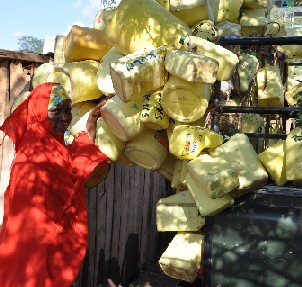
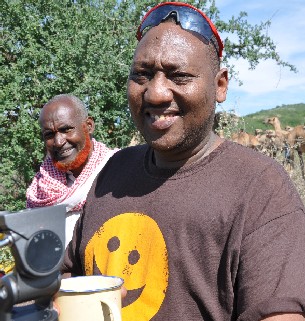
"We are located at the hills for security reasons," Ms Kulow says as we weave through acacia scrubs. This is a haven for camels which mourn in the morning as they are milked. Two men stand in opposite direction in what for long has come to be known as the ship of the desert. Today is more revered for the milk. The beauty of camels, says Safia, is that they are less prone to raids as would cows. And this explains why, even communities that hitherto disregarded camels are embracing it. Cattle raids remain a serious problem in parts of Kenya. The group has been running this kind of business for the past 15 years in an informal design. But it is this year that their fortunes have changed dramatically. Better fortunes are also attributed to the collapse of the Somali government, which triggered mass movement of her citizens to Nairobi and other major towns. Improved weather patterns, reduced cattle raids and increased demand for camel milk are attributed to these good tidings. To ensure constant supply, the farmers are engaging veterinary officers to advice on husbandry. This way, not all camels are allowed to conceive at the same time. The alternating design has allowed for the milk to keep flowing. Besides, development agencies like the Netherlands Development Organisation (SNV), the UN Food Agriculture Organisation (FAO) and VSF Suisse are now playing a pivotal and revolutionary role in placing the group on the straight and narrow of business. When insecurity and cattle raids were a byword for Isiolo, most women like Safia were ejected from the grazing land. They moved to Isiolo Township. They were not being discouraged. They quickly transformed their misfortunes to a lucrative business that has given them comfort and cash. SNV has been providing capacity building skills, exchange visits and scouting for new markets so that the group can reap maximum benefit from their business. Every day, an old green Land Rover traverses the unforgiving terrain as it collects the milk from farmers. Then it delivers in Isiolo Town around noon, where the Anolei women group receive it. The milk is then put in a freezer till the following day whe
A litre of camel milk trades at shilling 60 in Isiolo (euro 0.56) and shilling 100 (euro 0.93) in Nairobi. Some members like Safia earn up to shilling 60,000 (euro 560) a month as profit from the enterprise. This has helped improve their lifestyles a great deal. In Somali culture, the camel belongs to the man and the milk belongs to the woman. This explains why the Anolei group seems to be having an edge in the milk business in Isiolo and Eastleigh alike. But more could be done. According to SNV, the Anolei group could add value to the product to make it popular beyond the Somali community and of course to earn more premium from it. And SNV is teaming up with FAO to spearhead the camel milk project, which is now growing at an incredible rate. Siloma Morgan, who is in charge of the project, says his team is scouting for new markets in Komarok, South Central and Nakuru provinces. SNV is also interested in building the capacity of the women group so that it can improve on the areas of hygiene, improved production and fodder management. Safia indicates that the group will form a cooperative where members can own shares. She suggested that Anolei may start to process and package the milk in Isiolo. Isiolo is one of the Kenyan regions with high numbers of camels - currently put at 41, 000. The Somali camel is said to be the high yielding type and drought resistant. It is estimated that the region produces up to 40,000 litres of milk a day. However, transportation to Nairobi is taking a huge tall on the group. Today, it spends about shilling 450,000 (euro 4,200) in low season and 750,000 (euro 7,000) a month in high season. That is why Safia says they need to buy their own truck so as to cut on the transportation cost. Talks are under way with some financiers toward that effort. Indeed, camel milk is critical to the pastoral communities. It is culturally important as much as a wholesome food. Today, the commodity has shifted platforms from culture to commerce and is revolutionising the lives of women in this poor semi-arid region of Kenya. By Erick Wamanji (ewamanji@yahoo.co.uk) © afrol News - Create an e-mail alert for Kenya news - Create an e-mail alert for Agriculture - Nutrition news - Create an e-mail alert for Gender - Women news
On the Afrol News front page now
|








 front page
| news
| countries
| archive
| currencies
| news alerts login
| about afrol News
| contact
| advertise
| español
front page
| news
| countries
| archive
| currencies
| news alerts login
| about afrol News
| contact
| advertise
| español
©
afrol News.
Reproducing or buying afrol News' articles.
You can contact us at mail@afrol.com