afrol News, 16 November - Sometimes people wonder whether oil is a source of blessing or trouble in Africa, as most citizens of oil exploring countries in the continent are yet to tap the benefits of oil. This is evidenced by the recent UN's Development Index that sandwiched oil-rich African countries such as Nigeria bottom of the ladder. The Senegalese President claims to have found a "formula" to counter this.
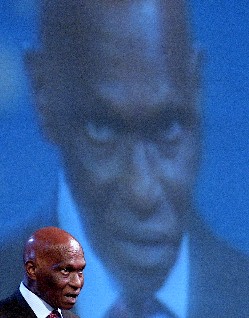
The poor performance of oil exporting nations clearly indicates that oil revenues either scale over the frontiers of Africa or are being corrupted by African executives. The Senegalese President, Abdoulaye Wade, believes in the first theory and therefore said that oil companies operating in Africa must plough back part of their profits into fighting poverty or risk being expelled from the continent by unrest and turmoil fuelled by inequality.
President Wade, whose country is yet to find oil, described it as "indecent and immoral" that oil giants were pocketing billions of profits from high oil prices while poor oil-importing states continue to have high energy bills.
Mr Wade has coined his own formula - the Wade Formula - which aims to distribute oil profits more equally between oil companies, African oil producing countries and non-oil producing states in the world's poorest continent. "We can create a system where everyone wins," Mr Wade told a recent news conference.
President Wade said he had presented his proposed formula to executives of the major oil companies Chevron and Exxon Mobil in the US last month. The two companies run extensive operations in Africa, particularly sub-Saharan Africa. "The oil executives had accepted my proposal and were willing to see how much could be done to fight poverty in Africa using their oil," he said.
The Senegalese President must be worried about the frequent power cuts and expensive energy supply in his country, which is having adverse negative impact on the economy. Senegal is even proposing alternative means of generating power mainly because the country pays billions of CFA to generate energy for local consumption.
Mr Wade said he had warned oil giants to be wary of the dangers of ignoring poverty in Africa. "I said to the oilmen, you are free to carry on like that if you want. But in the long term, you will be expelled from Africa," he said.
Bit by bit, the Senegalese leader said, societies in African oil producing nations are showing signs of violent rejection of energy companies that fail to share their profits from oil with them. "It has started; bit by bit it will spread."
President Wade, who is receiving strong opposition from his opponents as Senegal warms up for elections next February, says his agenda goes beyond national interest alone.
He believes time is ripe for Africa to have massive and strategic infrastructural projects. He cited an example of having a trans-continental railway linking Johannesburg to Dakar or a road and rail link from Dakar to Djibouti.
"The world has the means to do it, our partners have the means to do it," President Wade said, adding the United States had completed such trans-continental rail projects across its own huge territory in the 19th century. Mr Wade started making these infrastructure proposals to other African leaders as soon as he got elected in 2000, finding sympathy but no one to fund these giant projects.
afrol News - It is called "financial inclusion", and it is a key government policy in Rwanda. The goal is that, by 2020, 90 percent of the population is to have and actively use bank accounts. And in only four years, financial inclusion has doubled in Rwanda.
afrol News - The UN's humanitarian agencies now warn about a devastating famine in Sudan and especially in South Sudan, where the situation is said to be "imploding". Relief officials are appealing to donors to urgently fund life-saving activities in the two countries.
afrol News - Fear is spreading all over West Africa after the health ministry in Guinea confirmed the first Ebola outbreak in this part of Africa. According to official numbers, at least 86 are infected and 59 are dead as a result of this very contagious disease.
afrol News - It is already a crime being homosexual in Ethiopia, but parliament is now making sure the anti-gay laws will be applied in practical life. No pardoning of gays will be allowed in future, but activist fear this only is a signal of further repression being prepared.
afrol News / Africa Renewal - Ethiopia's ambitious plan to build a US$ 4.2 billion dam in the Benishangul-Gumuz region, 40 km from its border with Sudan, is expected to provide 6,000 megawatts of electricity, enough for its population plus some excess it can sell to neighbouring countries.










 front page
| news
| countries
| archive
| currencies
| news alerts login
| about afrol News
| contact
| advertise
| español
front page
| news
| countries
| archive
| currencies
| news alerts login
| about afrol News
| contact
| advertise
| español