afrol News / SciDev.Net, 26 January - A new study has pinpointed the mosquito species responsible for most malaria cases in south-western Cameroon - an area where little is known about the transmission of the disease.
The research, published in the scientific 'Malaria Journal' last week (17 January), could help in planning and implementing malaria control throughout West Africa, scientists hope.
Focusing on three coastal towns in south-western Cameroon, the 12-month study examined the transmission rates of three mosquito species that carry the malaria parasite.
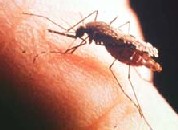
The species Anopheles gambiae was found to be responsible for the highest rate of infection and transmission - 73 percent - in the region, while Anopheles funestus accounted for 23 percent and Anopheles nili, four percent.
Different malaria carriers breed in different areas and at different times. Anopheles gambiae, for example, breeds in small pools of muddy water formed by human activities, such as well-digging, the researchers found.
The results could improve the planning and implementation of malaria control activities in coastal Cameroon and the whole of West Africa, according to lead author Jude Bigoga, from the University of Yaoundé, Cameroon. The findings would help scientists understand the behaviour of different carriers and how they should be controlled.
Emmanuel Kafwembe, director of Zambia's Tropical Diseases Research Centre, told the science media 'SciDev.Net', "Knowing how each [carrier] behaves will help scientists develop a system of controlling each differently."
Malaria is a major health problem in Cameroon. According to the World Health Organisation (WHO), the country has over 900,000 cases a year. Children less than five years old are the most affected. Malaria still remains among Africa's main killers, especially of children.
Unlike the southern forested and northern savannah areas of Cameroon, little is known about distribution and transmission of the disease in Cameroon's coastal regions, according to the scientists.
afrol News - It is called "financial inclusion", and it is a key government policy in Rwanda. The goal is that, by 2020, 90 percent of the population is to have and actively use bank accounts. And in only four years, financial inclusion has doubled in Rwanda.
afrol News - The UN's humanitarian agencies now warn about a devastating famine in Sudan and especially in South Sudan, where the situation is said to be "imploding". Relief officials are appealing to donors to urgently fund life-saving activities in the two countries.
afrol News - Fear is spreading all over West Africa after the health ministry in Guinea confirmed the first Ebola outbreak in this part of Africa. According to official numbers, at least 86 are infected and 59 are dead as a result of this very contagious disease.
afrol News - It is already a crime being homosexual in Ethiopia, but parliament is now making sure the anti-gay laws will be applied in practical life. No pardoning of gays will be allowed in future, but activist fear this only is a signal of further repression being prepared.
afrol News / Africa Renewal - Ethiopia's ambitious plan to build a US$ 4.2 billion dam in the Benishangul-Gumuz region, 40 km from its border with Sudan, is expected to provide 6,000 megawatts of electricity, enough for its population plus some excess it can sell to neighbouring countries.










 front page
| news
| countries
| archive
| currencies
| news alerts login
| about afrol News
| contact
| advertise
| español
front page
| news
| countries
| archive
| currencies
| news alerts login
| about afrol News
| contact
| advertise
| español