afrol News, 14 March - The obvious torture of Zimbabwe's opposition leader Morgan Tsvangirai and tens of activists seems to have finally changed the mood among African leaders that so far have supported President Robert Mugabe. South Africa is issuing a protest and the African Union (AU) is embarrassed.
The images of a beaten and tortured Zimbabwean opposition leader went worldwide and sent a clear message that the Mugabe regime had lost all inhibitions when it comes to treat the volatile situation in the country. The expected harsh reactions from non-African leaders came immediately, as always leaving President Mugabe unimpressed.
During today, however, it became clear that the Harare government also had crossed the line with African leaders. The images of Mr Tsvangirai - also broadcasted in most African countries - made President Mugabe unsustainable.
For the first time, the South African government and the ruling ANC party both released statements that could be read as clear protests. Deputy Foreign Minister Aziz Pahad expressed South Africa's "concerns" about the "the arrests, detention and reported assault of some opposition leaders."
"Pursuant to this objective, South Africa urges the Zimbabwean government to ensure that the rule of law including respect for rights of all Zimbabweans and leaders of various political parties is respected," the Pretoria government said in a clear message to President Mugabe.
Even the ANC, which has strong historic ties to Mr Mugabe's ruling ZANU-PF party, was left no other option than protesting "reports of the alleged assault of opposition leaders while in police custody." Party spokesman Smuts Ngonyama added that "the ANC trusts that a thorough investigation will be conducted into these allegations, and that any necessary action be taken in accordance with the law."
South African press reports also clearly indicate that President Thabo Mbeki has ordered leaving his government's "quiet diplomacy" strategy on Zimbabwe, which is now seen as a failed effort. President Mbeki reportedly told his Zimbabwean colleague that he would not accept political turmoil across the border when South Africa is to arrange the Football World Cup in 2010 - which is the same time as Mr Mugabe now plans to step down.
Other neighbours - including democracies such as Botswana, Mozambique and Zambia - still are uncertain on how to react to the situation. While the public and an increasing number of parliamentarians demand tough protests, governments are still waiting for a coordinated move by an equally confused Southern African Development Community (SADC).
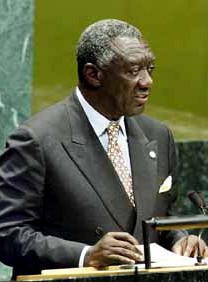
At an even higher level, the new African Union (AU) chairman, Ghana's President John Kufuor, however has made it clear that patience with the Mugabe regime has finished. "The African Union is very uncomfortable. The situation in your country is very embarrassing," Mr Kufuor told Zimbabweans questioning him while on a state visit in Britain.
"I know personally that presidents like Olusegun Obasanjo, from Nigeria, Thabo Mbeki from South Africa and others have tried desperately to exercise some influence for the better. But they came against stiff resistance," the AU leader added, demonstrating he had no problem speaking up in public against Mr Mugabe.
The Zimbabwean ruler never has been this much isolated, neither within his country nor in Africa. Pressure on Mr Mugabe to retire in 2008, when his current presidential term runs out, will only increase.
afrol News - It is called "financial inclusion", and it is a key government policy in Rwanda. The goal is that, by 2020, 90 percent of the population is to have and actively use bank accounts. And in only four years, financial inclusion has doubled in Rwanda.
afrol News - The UN's humanitarian agencies now warn about a devastating famine in Sudan and especially in South Sudan, where the situation is said to be "imploding". Relief officials are appealing to donors to urgently fund life-saving activities in the two countries.
afrol News - Fear is spreading all over West Africa after the health ministry in Guinea confirmed the first Ebola outbreak in this part of Africa. According to official numbers, at least 86 are infected and 59 are dead as a result of this very contagious disease.
afrol News - It is already a crime being homosexual in Ethiopia, but parliament is now making sure the anti-gay laws will be applied in practical life. No pardoning of gays will be allowed in future, but activist fear this only is a signal of further repression being prepared.
afrol News / Africa Renewal - Ethiopia's ambitious plan to build a US$ 4.2 billion dam in the Benishangul-Gumuz region, 40 km from its border with Sudan, is expected to provide 6,000 megawatts of electricity, enough for its population plus some excess it can sell to neighbouring countries.










 front page
| news
| countries
| archive
| currencies
| news alerts login
| about afrol News
| contact
| advertise
| español
front page
| news
| countries
| archive
| currencies
| news alerts login
| about afrol News
| contact
| advertise
| español