See also:
» 29.01.2013 - Libya peace very fragile, warns UN
» 31.03.2011 - Libya's Foreign Minister defects
» 24.03.2011 - How cyber-activism lent savvy to North African protests
» 18.03.2011 - Ten nations ready to attack Ghaddafi regime
» 18.03.2011 - Africa defies AU chief's support for Ghaddafi
» 18.03.2011 - France: We can start bombing Libya tonight
» 17.03.2011 - Libya rebels shoot down fighter jets
» 15.03.2011 - Ghaddafi thanks Germany, Russia and China


Libya
Politics | Human rights

Ghaddafi regime shows signs of weakness

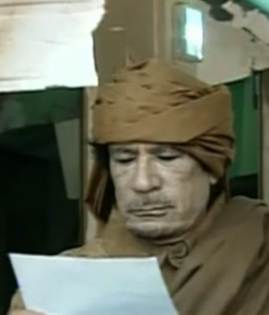
Libyan leader Moammar Ghaddafi on state TV

© Libya state TV/afrol News
afrol News, 8 March
- As Libya's rebels have repelled offensives from pro-Ghaddafi troops and NATO starts monitoring Libya's air space, Benghazi rebels confirm they were offered to negotiate about Colonel Ghadaffi's departure.

The revolution-turned-civil war has not offered the Ghaddafi regime the military successes it expected. Despite maximum use of force against civilians and the "liberated" towns and cities, no military gains were made.

The pressure seems to be increasing on the Ghaddafi regime. Indeed, its military strength is rapidly declining, with tanks, helicopters and other heavy military equipment being destroyed or conquered by rebel troops on a daily basis.

Even Colonel Ghaddafi's most powerful weapon, his airborne troops, is rapidly losing its potentials. Several pilots have defected, and aircrafts and helicopters are being shot down by the rebels.

Soon, Colonel Ghaddafi knows, his airborne force will be history altogether. NATO officials today confirmed what Mr Ghaddafi most probably already knew; that the Western military alliance already is playing a role in Libya.

According to US NATO Ambassador Ivo Daalder, the Western alliance already has started "monitoring" Libyan airspace. AWACS aircrafts from the alliance, he admitted, had already done this ten hours each day. This operation now was widened to provide monitoring on a 24-hour basis, he added.

On Thursday, Mr Daalder announced, NATO Defence Ministers will meet to analyse the data collected from this monitoring. Then, NATO will probably make a decision on a probable no-fly zone over Libya. Meanwhile, the Arab League is working at the UN to promote acceptance of such a no-fly zone.

Such a no-fly zone would remove the Ghaddafi regime's strongest card in the ongoing civil war. Air support in attacking the rebels and airborne operations into rebel-held lands have been the regime's main advantage. Without air support, the frontline could rapidly collapse, allowing for a quick rebel advance towards Tripoli.

Faced with these military facts, the Ghaddafi regime this week surprised by being willing to negotiate wi

Civilians in the city of Misrata celebrate having repelled an attack by pro-Ghaddafi troops

© Anonymous/afrol News
th the Benghazi-based interim government of "liberated Libya". It all started by the regime's announcement it would accept Venezuela's President Hugo Chávez offer to enter negotiations with the rebels.

Of course, nobody took the Venezuelan diplomatic initiative seriously. The Benghazi rebels would have nothing to do with it, refusing any negotiation with the totally discredited regime of Colonel Ghaddafi.

Yet, negotiators indeed came to Benghazi, the rebels now have confirmed. It remains unsure whether this is connected to the Venezuelan initiative, but the rebels say they were made an offer to negotiate about the Ghaddafi family's "honourable departure" without risks of being persecuted.

The news spread as wildfire, broadcasted over 'Al Jazeera', which is widely seen throughout Libya, also in Ghaddafi-held areas. Also the rebels' answer, saying "we do not negotiate" with someone slaughtering Libyans, was rapidly spread through media also available in Libya.

The news - or rumour only - of course has a deadly power for the Ghaddafi regime and on the moral of his remaining troops. The Colonel so far had displayed force and determination in his televised speeches and statements, saying he would fight until the very last and claiming the rebels were groups that had to be exterminated.

In an unprecedented move, Libyan state TV today commented on the reports that Colonel Ghaddafi had offered rebels a negotiated solution, including his "honourable departure". The state media vehemently denied this as unsustained rumours.

But the TV announcement could backfire, as it only contributed to spread the rumour of a possible negotiated end of the Ghaddafi regime. It could further weaken the position of the regime, causing still loyal troops to defect.

For the first time, the Ghaddafi is showing some ill-afforded weakness. It could mean a turning point in the fighting.


- Create an e-mail alert for Libya news
- Create an e-mail alert for Politics news
- Create an e-mail alert for Human rights news


    Printable version

On the Afrol News front page now


UN will not monitor human rights in Western Sahara

afrol News - The US has backed down on its demand that UN peacekeepers in Moroccan-occupied Western Sahara also shall monitor the human rights situation after Moroccan sources threatened to scale down relations with Washington.
Central African Republic
Central African Republic falling apart

afrol News - One month after the rebel movement Séléka took over power in the Central African Republic, unrest is spreading in the country. The new leader lacks control of his forces, which continue looting and abusing civilians.
Kenya
Kenyatta secures tight victory in Kenya

afrol News - The official election results in Kenya have finally been announced, and Uhuru Kenyatta managed to win the first poll round outright with a narrow 50.7 percent. But the main opponent, PM Raila Odinga, is filing a vote rigging complaint to the courts.
Cape Verde
Cape Verde to produce dragon fruit

afrol News - Cape Verde authorities have invested large sums to diversify the arid country's agricultural sector. Now, the dragon fruit, originating in tropical America, is being introduced for the first commercial production in Africa.
Egypt
Even governors in Pharaonic Egypt died in their 20s

afrol News - Researchers have analysed more than 200 mummies from ancient Egypt, finding that even high dignitaries were poorly nourished and had infectious diseases. The typical governor in Pharaonic Egypt died before he was 30 years old.


front page | news | countries | archive | currencies | news alerts login | about afrol News | contact | advertise | español 

©  afrol News. Reproducing or buying afrol News' articles.

   You can contact us at mail@afrol.com